

Have you ever closed your eyes and imagined riding a roller coaster? If you picture yourself at the very top of the highest hill, leaning over the edge right before the big drop, your heart rate might speed up and your palms might get sweaty. Even though you are sitting safely in a chair, your body reacts like you are actually on the ride.
This happens because your brain has a hard time telling the difference between something happening in real life and something you picture very clearly in your mind.
When you practice picturing things in your head every single day, you are doing something called daily visualization training. Just like doing push-ups makes your arms stronger, picturing images in your mind makes your brain stronger. In this article, we will look at how picturing things changes the way your brain works, how it helps you read and learn faster, and how simple tools can help you practice every day.
How Your Brain Changes When You Learn
Inside your head, you have billions of tiny helper cells called neurons. You can think of neurons like tiny people holding hands to pass messages back and forth. Everything you do – like riding a bike, reading a book, or throwing a ball – is controlled by these messages.
When you try something new, the message moves slowly because the path between neurons is brand new. Imagine walking through a forest full of tall grass and thick bushes. The first time you walk through, it is hard to move, and you have to go slow.
But what happens if you walk down that exact same path every single day?
- The grass gets pushed down.
- The dirt gets packed flat.
- Soon, you have a clear, smooth trail where you can run super fast!
Scientists call this brain-changing process neuroplasticity. “Neuro” means brain, and “plasticity” means something can be shaped, like play-dough. Every time you practice a skill in real life – or practice it inside your head – your brain builds a smoother, faster path.
What Happens During Visualization Training?
When you use visualization, you are not just daydreaming about winning a video game or flying through the clouds. Real visualization training is clear, detailed, and focused.
When you picture an action step-by-step, the exact same parts of your brain light up as if you were doing the real action!
For example, if a basketball player closes his eyes and pictures shooting a free throw – feeling the basketball in his hands, watching it arc through the air, and hearing it swish through the net – his brain sends weak electrical signals to his arm muscles. He isn’t actually moving his arms, but his brain is building that smooth trail in the background.
When you train your mind to picture things every day, three big changes happen in your head:
- Better Attention: Your brain learns to ignore distractions like loud noises, barking dogs, or pop-up ads on a phone.
- Stronger Memory: Pictures stay in your memory much longer than plain words or numbers.
- Faster Thinking: Because your brain trails are clear and smooth, you can process new ideas in less time.
Reading with Pictures Instead of Voices
Many people read by saying each word inside their head. You might be doing it right now! This inner voice is called subvocalization.
Talking inside your head while reading is totally normal, but it slows you down. That is because your inner voice can only speak as fast as your mouth can move – about 150 to 200 words every minute. But your brain can process pictures much faster than your mouth can talk!
Think about a picture of a red sports car. If you had to describe it in words, you would have to say: “There is a red, shiny car with four dark wheels, two doors, and bright headlights.” That takes several seconds to say out loud. But if someone shows you a photo of the car, your brain understands everything instantly in less than a second.
This is where visualization training helps you become a super learner. Instead of saying every word silently with your inner voice, you start turning the words into a movie that plays inside your head.
When you read a story about a dark forest, you don’t say “d-a-r-k f-o-r-e-s-t” in your mind. Instead, you instantly see tall green trees, dark shadows, and smell damp leaves. This lets you read faster, understand complex ideas easily, and remember what you read long after you.
Using Vision Boards to Keep Your Brain on Track
Picturing things in your head is powerful, but holding detailed images in your mind all day takes a lot of effort. Your mental energy gets tired, and day-to-day distractions can easily pull your attention away.
That is why combining your internal visualization with a physical tool like a vision board in your environment works so well. A vision board acts as an external anchor for your thoughts, making it much easier to keep your cognitive processing sharp and focused throughout the day.
How Vision Boards Help the Brain
Your brain relies on an internal filtering system called the Reticular Activating System (or RAS). Millions of details hit your eyes and ears every second, but your brain can only focus on a tiny fraction of them. The RAS acts like a security guard at the door, deciding which pieces of information get through to your conscious mind and which ones get ignored.
When you look at vision boards every day, you train your RAS to treat those visual concepts as top priorities. Instead of relying solely on mental energy, placing a physical vision board in your room or study space keeps your brain’s filter constantly tuned to important visual markers.
Vision boards also support overall cognitive processing by reducing mental fatigue. When complex ideas, visual concepts, or learning frameworks are displayed visually, your working memory does not have to work as hard to hold onto them. This frees up mental bandwidth in your brain, allowing you to process new information, organize complex thoughts, and solve problems much faster.
As a result, your mind naturally starts spotting helpful patterns and opportunities in real life – like noticing a specific book on a library shelf, connecting two separate ideas during study time, or picking up on a key term during class that you might have otherwise ignored. Vision boards strengthen overall mental organization and spatial thinking.
Integrating Vision Boards into Your Training Routine
Using vision boards allows you to anchor abstract mental thoughts into real-world reminders. Having clear images on a vision board posted near your desk or bed makes it much easier to start your daily mental practice because the board gives your mind an immediate starting point. When you train every day, looking at your vision board helps prime your visual brain before you close your eyes to build mental movies.
If you want to dive deeper into the mechanics of this strategy, you can learn more about how vision boards work and how to use them effectively through online resources such as Vision Board Kits by Maia. Learning how to structure vision boards to support visual thinking can make your mental training far more effective over time. The core idea is simple: keeping a vision board in your daily environment reinforces your mental training, supports daily cognitive function, and keeps your neural pathways active.
Dual Coding – The Secret Weapon for Memory
Why does mixing physical pictures with mental pictures work so well? Scientists explain this using an idea called Dual Coding Theory.
Dual coding means putting information into your head through two different channels at the same time:
- Channel 1: Words and Sounds (Language)
- Channel 2: Pictures and Spaces (Visuals)
Imagine you are trying to remember the word “Tree.”
If you only read the letters T-R-E-E, your brain only saves one piece of data. But if you read the letters T-R-E-E and see a picture of a tall oak tree at the same time, your brain creates two separate tags for that concept.
If you forget the word later on, your brain can still pull up the picture tag! Having two pathways to the same memory makes your recall twice as reliable.
When you do daily visualization training and surround yourself with visual cues, you are constantly using dual coding. You are giving your brain two ways to remember everything you learn.
Step-by-Step Daily Practice Routine
You don’t need to spend hours practicing visualization to see real results in how fast you think and read. Five to ten minutes a day is plenty. Here is a simple step-by-step routine you can try every day:
1. Find a Quiet Spot:
Sit somewhere comfortable where nobody will disturb you for five minutes. Close your eyes and let your shoulders drop.
2. Control Your Breathing:
Take three deep breaths in through your nose and out through your mouth. This calms your nervous system so your brain can focus.
3. Build a Mental Image:
Picture a simple object in your mind – like a bright red apple. See the smooth skin, the green leaf on top, and the shiny spots where the light hits it.
4. Add Senses to the Image:
Make the mental picture richer. Imagine picking up the apple. Feel its smooth skin, smell its sweet scent, and hear the loud crunch when you take a bite.
5. Anchor with External Visuals:
Open your eyes and look at your visual goals for 30 seconds. Let those real pictures lock into the mental movie you just built.
If you do this simple exercise every morning, your brain gets better at making sharp, clear mental images automatically whenever you read books or study new ideas.
Daily Visualization vs. Unfocused Daydreaming
It is easy to confuse visualization training with simple daydreaming, but they are actually very different activities for your brain.
- Daydreaming is passive. Your mind wanders from thought to thought without any clear plan or goal (like thinking about lunch, then a cartoon, then a warm sunny beach).
- Visualization Training is active. You are the director of a mental movie, carefully controlling what happens, paying attention to tiny details, and practicing specific skills on purpose.
| Feature | Daydreaming | Visualization Training |
| Brain Effort | Low (Mind wanders freely) | High (Focused attention) |
| Goal | Distraction or rest | Skill building & memory improvement |
| Structure | Uncontrolled and random | Planned and step-by-step |
| Brain Impact | Temporarily relaxes the mind | Rewires neural pathways (Neuroplasticity) |
| Reading Benefit | None (Causes you to lose your place) | Helps turn text into high-speed mental movies |
Conclusion: Simple Steps for a Stronger Brain
Rewiring your brain does not require magic or expensive machinery. Your brain changes shape based on whatever you spend your time practicing.
By practicing mental visualization every day:
- You build smooth, fast neural pathways in your brain.
- You learn to turn boring text into fast mental movies, helping you read quicker without subvocalizing every word.
- You give your brain dual paths to store and recall memories easily.
- You use tools like vision boards to keep your focus locked onto what matters most.
Start small. Take five minutes today to close your eyes, picture your goals in vivid color, and let your brain build the pathways to make learning easier!

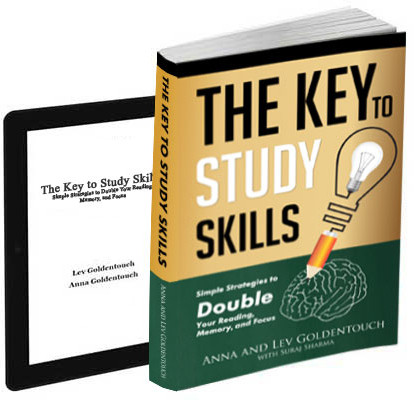
Get 4 Free Sample Chapters of the Key To Study Book
Get access to advanced training, and a selection of free apps to train your reading speed and visual memory