Parents usually put coding in the same mental folder as robotics club or chess: a useful hobby, possibly a career head start, definitely a reason to argue about screen time. That framing misses something more interesting. Writing code is one of the few activities a child can do voluntarily that trains, in a very direct …
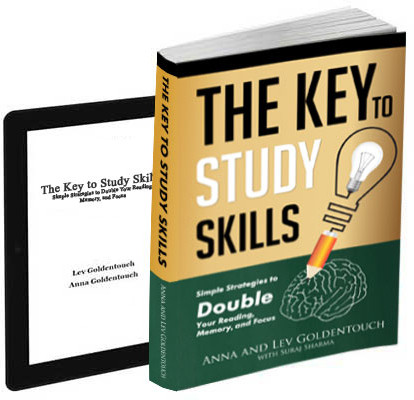
KeyToStudy Offers:
Memory, Speedreading, and Analysis
KeyToStudy Overview:
Memory, Speedreading, and Analysis
ProlificFocus Overview:
Productivity, Motivation, and Projects
ProlificFocus Offers:
Productivity, Motivation, and Projects
How to Learn Java Faster: Superlearning Techniques for Programmers
Most people learning Java approach it the same way they’d approach memorizing a list of vocabulary words: read the syntax, memorize the keywords, and hope it sticks. This is roughly the same mistake most non-programmers make when they imagine what learning a programming language involves. The grammar of Java — its keywords, its syntax, its …
Continue reading “How to Learn Java Faster: Superlearning Techniques for Programmers”
My advice for a young programmer
Programming is more than just writing lines of code—it’s a long-term mental discipline that blends logic, creativity, and resilience. For beginners, it often feels overwhelming: syntax errors, strange bugs, and the constant feeling that everyone else “gets it” faster. But the truth is, even seasoned developers once struggled through the basics. This article summarizes top …
Using search engines for research
Mastering Web Search: Smart Research Strategies for Superlearners Search engines are one of the most powerful tools in any learner’s toolkit—but only when used skillfully. With billions of web pages, how you search often matters more than what you search for. Superlearners must move beyond surface-level browsing and develop intentional, multi-angle research techniques that produce …
Psychology of Numbers: Why We Feel, Think, and Act Based on Digits
Numbers are everywhere. We see them on clocks, price tags, scoreboards, and social media likes. But numbers are more than just tools for measurement. They shape our thoughts, behaviors, and even our emotions. The psychology of numbers goes far beyond math; it’s deeply embedded in how we interpret the world. From sacred geometry to advertising …
Continue reading “Psychology of Numbers: Why We Feel, Think, and Act Based on Digits”
Implicit and explicit memory
Memory is what we are. Our memories shape us. Sometimes we remember. Other times we simply perceive differently. Why is it beneficial to have both explicit and implicit memories? Why do we find so many kinds of memory, and how to optimize the use of various memory kinds? Artificial intelligence training may provide a valuable …
Accelerated learning for programmers: QA and testing
In software development, QA (Quality Assurance) and testing are often the last lines of defense before a product reaches the customer. While developers build the functionality, it’s the testers who ensure that nothing breaks, nothing crashes, and the user experience remains seamless. But quality assurance is not merely about spotting bugs—it’s about understanding systems deeply, …
Continue reading “Accelerated learning for programmers: QA and testing”
Poemsgenerator.com Review (2024): Is this Poem Generator Worth It?
Have you ever struggled to come up with a poem? Maybe you have a brilliant concept, but you’re having trouble finding the right words. In this blog post, we’ll examine Poemsgenerator.com, a free online program that generates poetry for you based on your own keywords through artificial intelligence. We’ll look at its features, the …
Continue reading “Poemsgenerator.com Review (2024): Is this Poem Generator Worth It?”
The ideal home for better learning
How can we design and decorate our homes to improve the learning experiences? Is it possible? Is it expensive? This is a personal opinion based on my experimentation. This article talks about how the way we live can change our memory. It’s an important topic, and there’s a special course just for it. Here is …
Can We Handle the Power of Q-Star? The Moral Conundrum of Superintelligence
Project Q-Star is OpenAI’s greatest attempt to release artificial general intelligence that outperforms human capabilities. By potentially combining advanced AI with quantum computing, Q-Star aims to create superhuman levels of intelligence. But can mankind properly handle such immense power? Or does pursuing artificial superintelligence carry disastrous risks? Here, we will analyze the complex ethical dilemmas …
Continue reading “Can We Handle the Power of Q-Star? The Moral Conundrum of Superintelligence”