
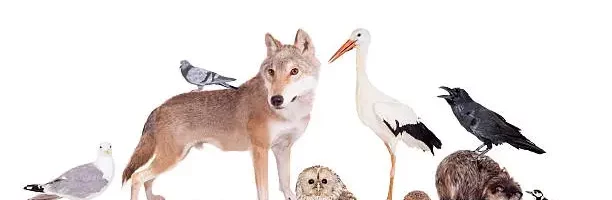
At first glance, the natural world seems synchronized—flocks of birds wheel in unison, herds move as one, and schools of fish swirl in perfect choreography. This visual harmony has led to the common belief that animals simply obey instinct, following the group because their biology demands it. However, this narrative tells only half the story. Recent studies, including findings discussed in Key to Study’s exploration of reaction speed and evolution, show us a different picture: one where animals often choose autonomy over instinct, adapting in ways that go beyond rigid patterns. This shift in understanding urges us to reconsider what it means to have agency in the animal kingdom and within ourselves. “Behavioural adaptations of animals” show that nature’s creatures are capable of thoughtful actions, independent decision-making, and strategic deviation from the group when survival depends on it.
Beyond the Herd: A Different Kind of Intelligence
In traditional biology, animals were seen as slaves to instinct—creatures of habit that obeyed their evolutionary scripts. But modern ethology—the “study of animal behavior”—reveals that many animals actively think for themselves. A paper by Jolles et al., cited widely in ecological research, demonstrates how individuals within animal groups often make decisions that go against the collective.
For instance, some fish break away from schools to explore new food sources. Certain birds deviate from their flock’s path to pursue remembered nesting sites. In primate societies, dominant individuals may steer the group’s direction, not through force, but by modeling successful strategies. These behaviors showcase flexibility and innovation, not mere reflex.
Even ants, long seen as the epitome of groupthink, show individual initiative. In some species, scouts seek new nesting sites and decide independently of the colony’s majority before guiding others to safer ground. This demonstrates that complex decision-making exists even in creatures with tiny brains.
Agency Over Instinct: Lessons from the Animal Kingdom
This growing body of evidence shows how “animal behaviour” includes more than reactive motion. Animals often exhibit boldness, curiosity, and caution, which are personality traits that influence their decisions. These are not errors in natural design; they are features that enhance survival.
From dogs who exhibit empathy to elephants who mourn their dead, there’s a mounting case that animals possess emotional intelligence. Researchers studying animal play, as explored in “The Joyful Mystery of Animal Play”, highlight how play is not just recreational—it’s a form of cognitive development. Through play, animals learn social cues, test boundaries, and experiment with roles like humans do.
Emotion as a Guide, Not a Limitation
One of the biggest takeaways from observing animal behavior is the adaptive nature of emotion. Humans often treat emotions like glitches—problems to be corrected. However, animals show us that emotions are usually tools. Fear prompts vigilance, anger sparks protection, and sadness fosters withdrawal and healing. Even guilt or worry, traditionally seen as negative, serve to correct or prevent behavior that could be harmful.
This insight aligns with findings from Key to Study’s article on funny animal reactions, which illustrates how animals express surprise, frustration, and even curiosity in ways that resemble human behavior. These are not anomalies but examples of “learning in animal behaviour”—where emotion and experience combine to guide future choices.
Even in predator-prey interactions, emotions play a role. Prey animals learn from traumatic escapes, adapting their escape tactics for future survival. Predators learn patience, precision, and sometimes even cooperation, refining their approaches based on past failures.
When Independence Becomes an Adaptation
We must also consider that “behavioural adaptations in animals” arise from necessity, conforming to a strategy in hostile or unpredictable environments. A lone wolf might leave the pack in hostile or unpredictable environments to avoid inbreeding. A chimpanzee might avoid conflict by aligning with new allies. A bird might delay migration based on weather cues rather than follow the flock unthinkingly.
These adaptations reflect the reality that survival is context-dependent. Animals use experience, memory, and observation to guide choices. They make mistakes, but they also learn from them, something robots cannot do without programming and something that deterministic biology often underestimates.
In urban areas, rats and pigeons adapt quickly to human behavior, learning feeding schedules and avoiding traps. This reflects a kind of urban intelligence—rapid learning that aids survival in dynamic environments.
Social Learning and Individual Wisdom
While many animals benefit from social structures, not all learning happens communally. Young dolphins practice echolocation on their own. Crows use tools and innovate with objects they’ve never seen before. Octopuses solve puzzles, escape tanks, and remember negative experiences. These are clear signs of autonomy.
What stands out here is that “animal adaptations” are not always instinctive—they’re informed. That is, animals absorb lessons from their environments and apply them uniquely. One crow might use a stick to dig insects, another might use leaves, and another might use wires. These are not random actions but calculated trials demonstrating a degree of cognition often denied to non-human species.
Even species once considered low in intelligence, like parrots and ravens, now display evidence of long-term memory, future planning, and symbolic communication. These traits suggest that complex thinking is more widespread than previously believed.
Flexibility Over Fixation: How the Brain Supports Choice
Neuroscience supports the idea that animals are more than automatons. Studies show that even relatively small-brained species have specialized neural structures for decision-making. Bees can differentiate between art styles. Pigeons can learn to categorize medical images. These discoveries challenge long-held assumptions about the cognitive limits of animals.
This is where “behavioural adaptations of animals” intersect with evolution, not in a fixed formula, but through dynamic interaction between genes and environment. Evolution favors the flexible, the adaptable, the thoughtful.
Moreover, this flexibility allows species to colonize new environments. Look at invasive species like the cane toad or the common starling. Their success isn’t just reproductive—it’s behavioral. They adapt quickly, learning to outcompete native species, avoid traps, and exploit new food sources.
Individuality in the Wild: Breaking the Mold
The idea that animals follow fixed rules denies them individuality. Yet, from the alpha female elephant that changes migration routes to avoid poachers, to the leopard who hunts at odd hours to avoid conflict, individual animals often behave in unique, context-driven ways.
Consider the famous example of the rogue orca, who taught her pod to strand-feed—sliding onto beaches to catch seals—a behavior once thought impossible for the species. This is not mimicry; it’s invention. That orca’s choices introduced a new behavioral norm to her group. Over time, what became an exception became a localized tradition—proof that one mind can shape many.
Other examples include dolphins using sea sponges as tools, or certain chimps developing leaf-sponging rituals for water drinking. These aren’t universal traits—they’re individual contributions to cultural evolution.
Human Lessons from Animal Minds
We are part of the animal kingdom. And just as animals are not bound entirely by biology, neither are we. Our instincts influence us, but they don’t dominate us. Humans can step away from herd thinking, reflect, and make deliberate choices—even in fear or uncertainty.
This parallels the findings from Jolles and colleagues and complements insights in mental health, which increasingly recognize the importance of agency, environment, and context in shaping behavior. While psychiatric models often emphasize neurotransmitters and diagnoses, a broader look at natural behavior encourages us to value adaptability over pathology.
We can learn from animals to embrace emotion, value context, and trust individual experience over blind obedience. As animals adapt creatively, we can rethink outdated habits and societal pressures, forging paths that align better with our values.
Instinct and Innovation in Harmony
Instinct and free will are not opposing forces—they work together. Instinct provides the framework, but experience and context fine-tune the response. Animals who deviate from the group are not just being stubborn—they’re innovating. Sometimes, their lives depend on it.
Think of salmon that change migration patterns to avoid pollution, or urban foxes that adapt to scavenging in cities. These animals are not victims of instinct—they’re co-authors of their behavior. So are we.
We can respect our biology without being ruled by it. The lesson from the wild is that instinct is a starting point, not the final word.
Evolution Doesn’t Demand Obedience
Evolution favors survival, not conformity. Behaviors that improve survival, even if unconventional, are often selected over time. Individual deviation can be the spark for species-level change. The first primate was to wash fruit, the first rat was to avoid poisoned bait, and the first bear used a rock to crack open food—all these behaviors began with one act of individual thinking.
This challenges the belief that biology equals fate. It doesn’t. Biology sets the stage, but individuals making real choices often write what happens next. Nature is not a rigid script; it’s an improv show where adaptation is the ultimate applause.
And adaptation isn’t just about reacting to danger—it’s about embracing opportunity. It’s about daring to try something new when the old way no longer works.
Final Thoughts: We Are Not Trapped
Just like the fish that swims away from the school in search of better food, or the bird that navigates based on memory rather than instinct, we, too, can create new paths. Even under stress, we can choose something different even when our instincts scream at us to act rashly.
The natural world isn’t a museum of rigid routines—it’s a laboratory of flexibility, testing new ideas daily. So the next time someone tells you that “you are what your biology says,” remember the orca who innovated, the crow who experimented, and the wolf who left the pack. These animals remind us that survival belongs not just to the strongest, but to the most flexible.
Behavioural adaptations of animals aren’t just about instinct—they are about learning, strategy, and the power to think for oneself.

Get 4 Free Sample Chapters of the Key To Study Book
Get access to advanced training, and a selection of free apps to train your reading speed and visual memory