
Most people believe learning is something that happens at a desk, inside books, or during formal classes. Yet the most powerful learning often occurs outside traditional study environments, during daily routines, conversations, travel, and moments of challenge. True mastery comes from integrating learning into life itself.
This idea is at the heart of The Key to Study Skills (2nd Edition): Simple Strategies to Double Your Reading, Memory, and Focus. The book shows that speed reading and memory techniques are only the beginning. Long-term success depends on lifestyle choices, persistence, curiosity, and the ability to apply learning in real situations.
This article shows how learning can become a continuous, adaptable process that supports academic success, professional growth, and personal fulfillment.
Learning as an Experience, Not a Task
Learning becomes stronger when it is connected to experience. Passive intake of information rarely leads to deep understanding, while active engagement creates meaning and retention.
A useful way to think about learning is through three stages:
- Preparation
- Experience
- Reflection
This mirrors effective study processes such as prereading, focused learning, and review. When these stages are respected, learning becomes structured without feeling rigid.
Travel as a Learning Framework
Travel provides a powerful model for experiential learning. Before arriving at a destination, preparation builds curiosity. Learning basic history, geography, cultural facts, or language phrases opens mental pathways and increases engagement.
During the experience itself, observation becomes active. Places, people, and events can be examined through questions such as:
- What is its origin and purpose?
- How has it changed over time?
- What emotions or ideas does it evoke?
- How does it connect to broader patterns or systems?
After returning, reflection connects scattered impressions into a meaningful understanding. Reviewing photographs, revisiting historical sources, and organizing memories into narratives reinforces retention. Learning is no longer abstract; it becomes personal and structured.
This same approach applies to studying any subject. Preparation builds anticipation, engagement deepens comprehension, and reflection turns information into knowledge.
Simple Daily Exercises That Strengthen Learning
Learning does not require long study sessions or complex tools. Short, focused exercises practiced consistently can dramatically improve memory, attention, and creative thinking.
Each of the following activities can be completed in about ten minutes and practiced anywhere:
- Mindful memorization of names, numbers, and details on first exposure
- Reading and recalling a small set of interesting facts
- Turning written content into imagined scenes or short films
- Learning a few words from a foreign language
- Reconstructing conversations, talks, or videos from memory
- Visualizing people or places in detail without prompts
- Creating multiple associations for a single piece of information
- Recalling visual scenes after brief observation
- Memorizing sequences such as passing cars or short lists
- Remembering daily tasks without external reminders
- Keeping a reading journal to track retention over time
- Finding creative alternative uses for everyday objects
These exercises build mental flexibility and reveal personal learning styles. Over time, they transform ordinary moments into opportunities for active practice.
Integrating Learning into Everyday Life
Once learning skills improve, daily life naturally changes. Tasks can be performed faster, attention becomes sharper, and curiosity increases.
Several shifts commonly occur when learning becomes more efficient.
Speed and Focus
Certain activities can be accelerated without loss of quality. Reading, writing, listening, and reviewing information become faster and more controlled. This frees time for reflection and creative exploration.
Multitasking with Awareness
Some tasks cannot be sped up, but they can be combined. When learning skills improve, attention can be divided strategically without noticeable loss in performance. This allows learning to coexist with entertainment, discussion, or light physical activity.
Turning Routine into Training
Even activities such as commuting or waiting can become learning exercises. Observing details, tracking patterns, or recalling sequences builds memory strength and focus.
Raising Quality Standards
Improved efficiency creates room for higher standards. Tasks that once felt overwhelming become manageable, allowing for refinement, review, and deeper understanding.
Expanding Variety
Learning thrives on variation. Exploring different ways of approaching familiar activities strengthens adaptability and creativity. Variety prevents stagnation and keeps curiosity alive.
Firsthand Experience Fuels Creativity
Creativity grows from exposure. While reading and observation are valuable, firsthand experience creates the strongest mental connections.
A well-known principle captures this clearly:
- Hearing leads to forgetting
- Seeing leads to remembering
- Doing leads to understanding
Direct interaction with environments, people, and challenges generates raw material for creative thinking. Travel is one of the most effective ways to break habitual patterns and refresh perspective, but creative exposure can also come from new hobbies, conversations, or physical activities.
Keeping notes, photographs, or journals helps preserve these experiences and turn them into lasting insights.
Self-Reliance and Creative Thinking
Creative ability strengthens when individuals rely on their own thinking. External experts are valuable collaborators, but dependence weakens initiative.
Problem-solving improves when questions are explored independently, ideas are tested personally, and conclusions are formed through reflection. This habit builds confidence and adaptability, both essential for long-term success.
Learning Through People and Play
Creativity is contagious. Interaction with curious, engaged people stimulates new ideas and perspectives. Conversations that challenge assumptions or explore unfamiliar topics act as mental workouts.
Children, in particular, demonstrate natural imaginative thinking. Engaging with their playful associations and open-ended questions can reignite creativity and flexibility in adults.
Games and puzzles also provide structured creative exercise. Strategy games, word games, and physical sports require planning, adaptation, and anticipation. These skills transfer directly to learning and problem-solving.
Reading and Writing as Creative Tools
Reading fuels imagination when done actively. Selective, thoughtful reading stimulates ideas rather than overwhelming attention.
Exposure to diverse viewpoints strengthens critical thinking. Reading biographies, magazines, or unfamiliar genres broadens perspective and encourages mental cross-training.
Writing plays a special role in learning. It forces organization of thoughts and transforms abstract ideas into concrete form. Even informal writing strengthens comprehension and creativity by engaging multiple cognitive processes simultaneously.
Health, Rituals, and Mental Environment
Learning depends on physical and mental well-being. Exercise, rest, and fresh air support brain function and emotional balance. Physical activity often triggers insights by creating rhythmic, meditative states.
Personal rituals can also support focus. Whether through music, movement, or quiet routines, rituals signal the brain that it is time to create or learn. The effectiveness lies not in the ritual itself, but in the consistency and mindset it encourages.
Music, when chosen carefully, can reduce mental noise and improve concentration. Instrumental music with a steady rhythm and minimal variation often supports sustained focus best.
Remembering Conversations and Meetings
A large portion of learning happens verbally. Meetings, discussions, and lectures require different memory strategies than reading.
Active listening is essential. Writing keywords, drawing simple images, or summarizing aloud helps create mental markers. These markers allow conversations to be reconstructed later with clarity.
One powerful technique is to pause and mentally summarize what has been understood so far. This reinforces structure and reveals gaps in understanding.
Active Learning Matters
Memory techniques alone are not enough when the information volume increases. Writing, discussing, and explaining activate learning and increase retention.
Using information soon after learning signals relevance to the brain. Without application, even strong memories fade quickly.
Why Doodling Improves Focus and Memory
Doodling is not a distraction. Research shows it improves retention and productivity, especially during long lectures or meetings.
Doodling allows creative processing to coexist with logical attention. Instead of drifting into daydreaming, the mind stays engaged through visual expression.
Doodles can take many forms: shapes, symbols, words, patterns, or illustrations. Over time, they become personalized visual markers that strengthen recall.
Annotation, whether on paper or digitally, enhances this process. Visual interaction with information calms the mind, improves focus, and supports creative memory formation.
The Foundations of Long-Term Success
Three values consistently support learning and achievement: persistence, curiosity, and empathy.
Persistence
Persistence defines success. Goals are reached through sustained effort, even when progress feels slow. While gratification may be delayed, persistence compensates for obstacles and builds resilience.
Curiosity
Curiosity transforms learning from obligation into enjoyment. It motivates exploration, creativity, and problem-solving. When curiosity is present, alternative learning paths always exist.
Empathy
Empathy strengthens resilience. Supportive relationships allow individuals to recover from setbacks and take meaningful risks. This emotional safety enables growth and long-term achievement.
How Better Students Are Built
Effective studying is not limited to techniques. Health, creativity, communication, and efficiency all matter. However, the most critical ingredient is thinking.
True learning happens when ideas are questioned, problems are solved actively, and concepts are applied. Tools such as speed reading and memory techniques accelerate this process, but they do not replace thinking.
Hands-on practice, reflection, and experimentation turn information into usable knowledge.
From Struggling Student to High Performance
Academic transformation follows a clear pattern:
- Develop curiosity by showing why the subject matters
- Build confidence through achievable successes
- Create a clear learning plan
- Maintain progress through consistent follow-up
When students learn to approach subjects as systems rather than obstacles, learning becomes strategic and engaging. Confidence grows as problems shift from intimidating to solvable.
Conclusion
Learning is not confined to classrooms or books. It is shaped by lifestyle, curiosity, persistence, and the willingness to engage actively with the world. When learning becomes experiential, reflective, and continuous, it supports both personal fulfillment and professional success.
Train Your Brain for Better Reading and Memory
If you want to apply these techniques systematically and see real results, they are explained in full detail in The Key to Study Skills (2nd Edition): Simple Strategies to Double Your Reading, Memory, and Focus. The book provides a clear, structured approach to improving memory, focus, and learning efficiency, without relying on rote repetition.
For learners who want to go beyond theory and build real capability, the KeyToStudy: Memory Masterclass offers structured guidance and hands-on training. Through clear instruction and systematic practice, the course helps you strengthen learning skills that apply not only to studying but to professional growth and lifelong education.
📩 For course discounts or questions, contact [email protected] and take a confident step toward mastering learning as a long-term advantage, not a short-term effort.

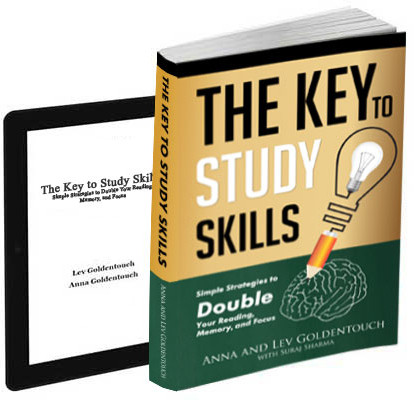
Get 4 Free Sample Chapters of the Key To Study Book
Get access to advanced training, and a selection of free apps to train your reading speed and visual memory