
As reading skills advance, the challenge is no longer speed alone; it is control. Knowing when to slow down, what to retain, and how to navigate complex, heterogeneous texts becomes far more important than raw words per minute. Advanced readers do not treat all text equally; they adapt their strategy dynamically.
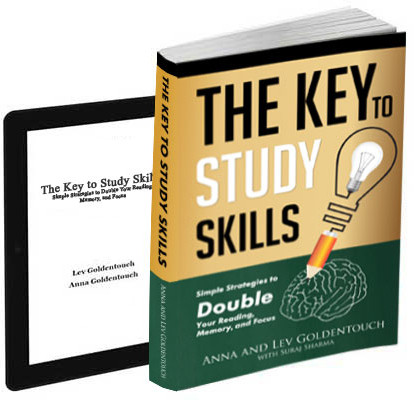
The Key to Study Skills (2nd Edition): Simple Strategies to Double Your Reading, Memory, and Focus introduces powerful techniques that go beyond traditional speedreading. These methods use color-based thinking, synesthetic visualization, balanced skill training, and deliberate marker generation to handle complex material without overload.
This article explores how experienced readers use color to organize meaning, train speed and retention without burnout, and convert dense text into clear, memorable mental structures, skills further developed in KeyToStudy: Memory Masterclass.
Using Color to Control Reading Speed and Meaning
Why Not All Text Deserves the Same Speed
Advanced reading requires flexibility. Some passages demand careful analysis, while others only require light scanning. Treating all text identically leads either to wasted time or lost meaning.
Color-based reading introduces intentional variation in reading speed and attention. Instead of reacting unconsciously, the reader assigns meaning and priority consciously.
This technique works best for experienced readers who already:
- Control eye movement
- Generate markers efficiently
- Understand prereading and rereading
For beginners, speed variation often confuses. For advanced readers, it becomes a navigation system.
Coloring Text to Track Perspectives and Ideas
The Core Rule of Text Coloring
Coloring is not decoration. It is semantic labeling. Each paragraph receives a color based on its dominant role, not on personal opinion.
The most important rule:
- Colors must reflect the text, not your thoughts
The goal is to reconstruct the text mentally, almost photographically, when reviewing later.
The Seven-Color Cognitive System
Each color represents a specific cognitive function:
- Green (Creativity)
New, surprising, or transformative ideas. These require pauses, deeper thinking, and extensive linking. Green is rare and valuable. - White (Support)
Facts, data, references, and authority. Individually small, collectively essential. These reinforce knowledge structures. - Blue (Flow & Methodology)
The logic, structure, and guidance of the author. Blue helps you follow arguments and recreate processes later. - Red (Emotion & Controversy)
Anecdotes, conflict, strong imagery, or emotional triggers. Red markers are powerful because emotion enhances memory. - Yellow (Opportunity & Hope)
Future applications, possibilities, and positive implications. These lines illuminate potential use. - Black (Threats & Risks)
Warnings, uncertainty, scams, or danger. Rare but important. Often highlighted with underlines. - Gray (Irrelevance)
Content with no current value. Let it fade. Not everything deserves retention.
Using consistent colors allows fast navigation during rereading and helps the brain locate meaning instantly.
Synesthesia: Turning Reading Into a Mental Code Highlighter
What Synesthesia Adds to Reading
Synesthesia occurs when senses overlap, such as seeing colors when processing numbers or letters. While naturally rare, partial synesthesia can be trained.
In reading, synesthesia works like a mental code highlighter, similar to how programmers read syntax-colored code faster than plain text.
Instead of memorizing words, the reader remembers:
- Color dynamics
- Visual patterns
- Multisensory associations
This dramatically improves navigation and recall in complex material.
Training Synesthetic Associations
One effective preparation method uses the Stroop effect, reading one color while visualizing another. Over time, number–color or letter–color associations may emerge naturally.
Examples include:
- Color-coded music notes
- Colored piano keys
- Visualized tonal patterns
With enough practice, associations strengthen automatically. At advanced levels, markers may form subliminally, without conscious awareness.
Synesthesia is not forced. It emerges through repetition, consistency, and patience.
How to Train Reading Without Creating Bad Habits
The Balance Every Reader Must Maintain
Reading training is a balancing act between four forces:
- Speed
- Retention
- Strain
- Focus
Ignoring any one of these causes regression or burnout.
Speed increases do not happen linearly. Progress often comes in jumps, followed by temporary drops. This is normal.
Retention should usually stay above 80%. Some tasks require near-perfect retention at low speed, while others tolerate low retention at very high speed.
Strain is a warning sign. Eye or mental fatigue indicates improper technique, not lack of discipline.
Focus must be trained holistically. Overdeveloping one skill creates an imbalance and slows long-term progress.
Choosing the Right Texts for Speedreading
Not all texts benefit from speedreading.
Avoid speedreading:
- Extremely complex formulas
- Short, dense passages
- Stress-inducing material
- Number-heavy references
Texts well-suited for speedreading include:
- Business articles
- Technical blogs
- Educational essays
- Informational nonfiction
Strategic text selection protects motivation and accelerates learning.
A Structured Path for Reading Progress
A balanced progression typically follows these stages:
- Read at ~250 wpm and raise retention to 90%
- Suppress subvocalization and reach ~450 wpm
- Restore retention patiently
- Expand visual angle and train saccades
- Reach ~800 wpm with stable comprehension
- Fully integrate preread–read–analyze cycles
- Achieve ~1200 wpm at ~80% retention
At advanced levels, reading becomes effortless and non-fatiguing.
Tools for Training vs. Tools for Reading
Word-flashing programs help train perception but are not ideal for real reading.
They are useful for:
- Training speed perception
- Practicing focus under pressure
They are poor for:
- Deep comprehension
- Flexible pacing
- Strategic rereading
True reading requires control: prereading, pausing, rereading, and marker creation.
Freeing the Mind While Reading
Advanced reading demands mental simplicity.
During reading:
- Do not question
- Do not analyze
- Do not predict
All thinking belongs before or after, not during.
Reading becomes a Zen-like process, attention fully aligned with the text. This mental clarity improves comprehension and reduces fatigue.
When Slow Reading Is Necessary
Ironically, slow reading becomes difficult for skilled speedreaders. Yet it remains essential in specific cases:
- Poetry and literature: for sound, rhythm, and emotional depth
- Foreign languages: for precise word-level markers
- Complex formulas: for symbol-by-symbol comprehension
Slow reading requires deliberate reduction of saccades and sometimes conscious vocalization.
Mastery means being able to move both fast and slow at will.
Marker Generation: Turning Text Into Memory
The Purpose of Markers
Markers are compact, visual summaries of meaning. They capture what matters most, not everything.
Good markers:
- Are memorable
- Capture structure
- Ignore unnecessary detail
No two readers create identical markers, and that is correct.
The T-Card Method
One effective approach divides space into:
- Text
- Marker drawings or summaries
Markers should be simple. Artistic quality is irrelevant. Chunking (such as 2×2 groupings) helps manage complexity.
Sometimes details migrate between markers. This is acceptable. Removing them costs more effort than keeping them.
Choosing What to Keep and What to Skip
Not all details deserve retention.
Key questions to ask:
- What do I need from this text?
- What can be skimmed?
- Why did the author include these details?
Fast reading accepts controlled loss. If too much is lost, rereading is always an option.
Conclusion: Reading as a Strategic Skill
Advanced reading is no longer about speed alone. It is about strategy, adaptability, and structure. Color-based thinking organizes meaning. Balanced training prevents burnout. Marker generation converts complexity into clarity. These methods are explained and integrated throughout The Key to Study Skills (2nd Edition): Simple Strategies to Double Your Reading, Memory, and Focus.
If you want to master reading at every level, from scanning to deep comprehension, this system provides the tools to do so with precision and confidence.
📩 Contact us at [email protected] to receive exclusive discounts on the course and elevate your learning skills further.

Get 4 Free Sample Chapters of the Key To Study Book
Get access to advanced training, and a selection of free apps to train your reading speed and visual memory