Usually, I focus on large mental structures, like mental palaces and cities or massive mindmaps. We do not always need something massive. Quite often it is enough to place a mental wardrobe in one of the existing mental palaces. The Memory Wardrobe, a sanctuary of nostalgia and tales untold. Each garment, a vessel of recollection, …
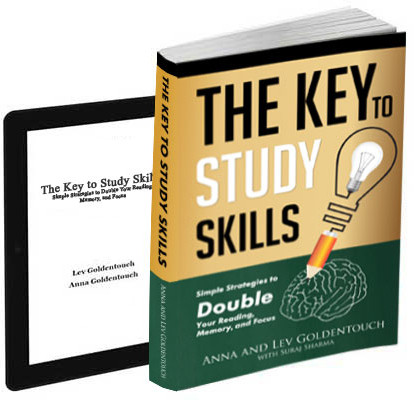
KeyToStudy Offers:
Memory, Speedreading, and Analysis
KeyToStudy Overview:
Memory, Speedreading, and Analysis
ProlificFocus Overview:
Productivity, Motivation, and Projects
ProlificFocus Offers:
Productivity, Motivation, and Projects
Reversed PAO: system applying an action to a person
The most useful format of visualization in PAO, which means a person performing an action with an object. While memory champions use PAO mainly to remember long sequences of numbers or cards, we can use it in speedreading to remember any chunks between three and five words, more if we use more complex PAOX. This …
Continue reading “Reversed PAO: system applying an action to a person”
Memorizing numbers using fixed PAO
Fixed PAO visualizations are traditionally used to memorize numbers. In the first decade of the 21st century, most memory masters used this methodology for memory competitions. While I recommend using flexible PAO to encode pretty much everything, fixed PAO visualizations for numbers do not get enough attention from me. Here I want to address this …
PAOX as a way to remember 20 words in one visualization
Typically PAO is used to remember one person using one action with one object. You can add to the formula to remember more. I put my limit around 9 words per visualization: otherwise, chunking gets harder. You might add more. If you want to improve your memory using special techniques based on how indigenous people …
Continue reading “PAOX as a way to remember 20 words in one visualization”
Using chunking with mental palaces and mindmaps
Chunking is a very important subject, yet it is not sufficiently discussed. It appears to be very simple, misleadingly simple. When used in memory championships, chunking is preset and given as a template. But when we read, the nature of chunking changes. When we multitask it changes again. If you’re keen on delving into unlocking …
Continue reading “Using chunking with mental palaces and mindmaps”
Placing PAOs and mindmaps in mental palaces
When I just learn mental palaces I found them extremely confusing. Where do I place all of my memory objects within? How can I use these large structures to remember everything I need? Once the structure is full, how do I add more to it? It took me years to find the right way for …
Continue reading “Placing PAOs and mindmaps in mental palaces”
Atomic memorizations: pros and cons
Most of the visualizations we use to remember things are atomic. By atomic I mean that you cannot divide the visualization without ruining it, and connections to other visualizations are not as strongs connections within the visualization. Such visualizations are not a part of a story, and require complex mental structures. Beginners almost never use …
Associative connections in mental landscapes
Our memory and thinking are deeply associative. Associations are critical for creativity. However, there is no clear recipe for creating associations. Instead, I suggest several options you can mix and match. If you want to improve your memory using special and new methods based on an ancient memory technique, you should take my memory masterclass. …
Continue reading “Associative connections in mental landscapes”
Long term memory manipulations
Most of the memorization methods work with long term memory for several hours or days. This is what we train working with memory palaces and mindmaps. Some of the exercises work with short-term and memory: remembering an image of a paragraph or a series of numbers for a few seconds, enough to grasp complex concepts …
Memorizing tables
Memorizing tables is hard. Fortunately, there are not many people that need to memorize many tables and not many tables that most of us need. There are some adaptations for regular mental structures and some specific memory structures which work best with tables. Please consider the pros and cons of each approach. Tables of contents …