

Back to School Smarter: Strategies to Accelerate Learning from Day One
As the new school season approaches, there’s an overwhelming amount of advice on what supplies to buy, what apps to download, and how to survive those early alarm clocks. But beneath the surface of stationery lists and daily planners lies a more essential task: preparing your mind to learn.
Going back to school isn’t just about showing up with the right materials—it’s about showing up with the right mindset, strategies, and systems. Whether you’re a student, a professional returning to structured study, or a parent supporting your child’s education, creating a foundation for successful learning is key to long-term academic performance and personal growth.
This isn’t your typical “back to school checklist.” Instead, it’s a practical, neuroscience-backed framework to help you prime your brain and environment for focused, meaningful, and lasting learning.
Let’s dive into the steps that can transform a new academic year into your most productive and rewarding one yet.
1. Start with the Syllabus: Set the Mental GPS
Before diving into new subjects, the most powerful thing you can do is read the syllabus thoroughly. This isn’t just about knowing deadlines—it’s about building a mental roadmap of the learning journey ahead.
Ask yourself:
- What themes or concepts are repeated?
- Which areas are emphasized and assessed?
- What topics spark curiosity—or anxiety?
By previewing the structure of a course, your brain starts to form a framework that organizes new information. This is called schema building, and it significantly improves comprehension and retention.
If unfamiliar terms show up in the syllabus, don’t ignore them. A little curiosity-driven Googling now can save hours of confusion later—and might even spark early enthusiasm for subjects you assumed you’d hate.
Want to go deeper on this kind of structured pre-learning? Explore this back-to-school guide on accelerated learning, which shares advanced strategies to prepare mentally before classes begin.
2. Pre-Read Course Material: Prime Your Brain for Learning
Just like athletes warm up before competition, learners should pre-read before the official teaching begins. This doesn’t mean studying every line in the textbook, but rather skimming and scanning to get a sense of the material’s architecture.
Focus your pre-reading on:
- Headings and subheadings
- Diagrams, charts, and visuals
- Summary boxes or review sections
- Keywords and bolded text
Try to identify which parts will require rote memorization, which demand conceptual understanding, and which offer hands-on practice opportunities.
Pre-reading lights up your brain’s pattern recognition systems and enhances what psychologists call “semantic priming”—the brain’s ability to absorb new information more easily when it’s already been partially exposed.
3. Prepare for Active, Not Passive, Learning
The most effective learning doesn’t happen when you sit back and absorb—it happens when you engage. So before school starts, ask yourself:
- How can I make this learning hands-on?
- Are there opportunities to teach what I learn to others?
- Can I turn subjects into projects or experiments?
Visualization can help here. Spend a few minutes imagining yourself speaking about the subject, creating a project, or assisting a peer in understanding it. This kind of mental rehearsal not only reduces anxiety but also primes your brain for action.
This idea is explored in depth in KeyToStudy’s back-to-school program, which combines visual tools, memory techniques, and active recall systems to train smarter, not harder.
4. Build a Personal Note-Taking Strategy
Note-taking isn’t just about recording—it’s about processing. Decide in advance how you’ll take notes, and make your method deliberate and repeatable.
Here are some approaches to consider:
- Mind maps for visual thinkers
- Cornell notes for organized learners.
- Bullet-point outlines for speed and simplicity.y
- Digital note apps like Notion, Evernote, or OneNote
- Handwritten notebooks, if writing, boost retention for you
Ask yourself:
- What’s worth writing down?
- Will I highlight or annotate margins?
- How will I review this later—daily, weekly, or before exams?
If you’re more digital, plan how you’ll organize and back up your notes. If you’re more visual, incorporate color, sketches, or diagrams. There’s no universal best method—just the one that works best for how your brain learns.
5. Design a Daily Routine That Supports Learning
Academic success isn’t built on raw brainpower alone— shape youraily habits shape it. The most effective learners structure their days to include:
- Dedicated study blocks (with breaks!)
- Time for physical activity
- Mental rest and reflection
- Consistent sleep routines
- Scheduled review sessions
As a rule of thumb, aim for 8–10 hours of focused learning per week outside of classroom time. That includes reading, revising, self-quizzing, and project work. It’s also wise to schedule non-cognitive activities like walking, stretching, or even meditating—these are essential for consolidating memory.
Want to build a sustainable rhythm? Consider tools like digital calendars, Pomodoro timers, and habit trackers to stay consistent. And don’t forget to schedule downtime—productivity thrives on balance.
For those needing a structured system to tie all this together, the Back to School Deluxe Bundle offers advanced resources that integrate learning plans, visualization exercises, and memory boosters to help students start strong and stay consistent.
6. Make Learning Social—Strategically
Human beings are wired to learn through connection. Discussing ideas, debating views, and explaining concepts to others improves retention and helps you see your blind spots.
Here’s how to make learning more social:
- Join or create study groups
- Participate in class discussions (even online forums)
- Teach your peers what you’ve learned (the “Feynman Technique”)
- Connect with mentors or teachers for feedback.
- Share interesting ideas on social media (if you’re bold, even make educational content)
You can even reconnect with classmates or learning communities through platforms like KeyToStudy’s Facebook page, where students and speed-learning enthusiasts from around the world exchange insights, questions, and study hacks.
And if you’re a parent supporting a student, recognize that social learning is often the missing link between frustration and progress. In fact, research shows that children and teens are more likely to engage with academic tasks when they feel socially connected and emotionally safe.
7. Tame Stress, Embrace Calm
A little stress can sharpen focus, but chronic stress kills learning. It impairs memory, reduces cognitive flexibility, and destroys motivation. That’s why creating emotional space for learning is just as important as preparing notes and textbooks.
Here’s how to keep your nervous system in check:
- Practice mindfulness or breathing exercises before study sessions
- Schedule short breaks for movement or outdoor time..e
- Use micro-rewards to stay motivated (a snack, a song, a scroll break—whatever works)
- Avoid multitasking, especially with social media, during study
Build in regular moments of low-stimulation downtime—reading for pleasure, casual gaming, or simply doing nothing. These “reset moments” recharge your executive functions and improve learning outcomes.
Parents and educators should also recognize signs of burnout or emotional resistance. In one excellent read, Smartorfun explains why some students resist school, not because they’re lazy, but because the environment doesn’t feel safe or motivating. Shifting that mindset can make a world of difference.
8. Prepare Mentally for a Fresh Start
Going back to school is more than just returning to routine—it’s a psychological transition. Whether you’re excited, anxious, burnt out, or somewhere in between, your mindset on Day 1 sets the tone for the months ahead.
Here’s how to mentally reset:
- Write a short list of learning goals (not just grades—skills, knowledge, projects)
- Visualize yourself succeeding and staying focused.
- Reflect on what worked and what didn’t work last year..
- Set an intention: “This year, I’ll focus on…”
Even just 10–15 minutes of self-reflection and goal-setting can turn a passive return into a proactive mission. And if you’re looking for deeper mindset techniques rooted in neuroplasticity and memory science, my book Speed Reading Mastery explores powerful ways to retrain your brain for learning in today’s digital age.
Final Thoughts: When the Mind Is Ready, Learning Becomes a Joy
School shouldn’t feel like survival—it should feel like possibility. But that can only happen when your environment, schedule, mindset, and tools are aligned with how your brain actually learns.
Whether you’re a student heading back to class, a parent supporting a child, or an adult learner restarting your journey, success starts before the first lesson. It begins with preparation, clarity, and curiosity.
Remember:
- Read the roadmap (your syllabus)
- Warm up your brain with pre-reading
- Set yourself up for active, not passive, learning..
- Build a sustainable routine and social connections..
- Protect your energy and focus.
- Use tech, visualization, and smart note strategies.
- Get your head in the game.
And don’t go it alone. Check out tools like the Back to School Deluxe Bundle or explore this broader framework for back-to-school learning that includes practical steps for memory, focus, and accelerated comprehension.
Back to school isn’t just a return—it’s an opportunity. So prepare like a learner. Show up like a leader. And keep learning like your future depends on it—because it does.

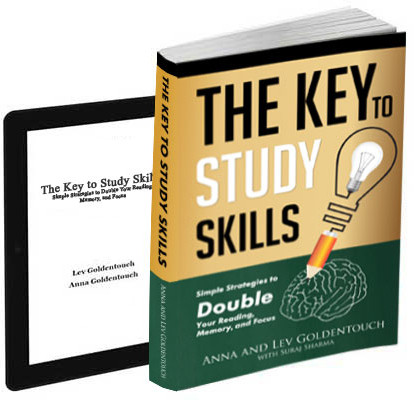
Get 4 Free Sample Chapters of the Key To Study Book
Get access to advanced training, and a selection of free apps to train your reading speed and visual memory