
Most people assume that reading faster automatically means understanding less. That belief alone keeps millions of readers trapped at slow speeds, rereading lines, losing focus, and forgetting what they just read. The truth is more encouraging: speed and comprehension are not enemies; when approached correctly, they reinforce each other.
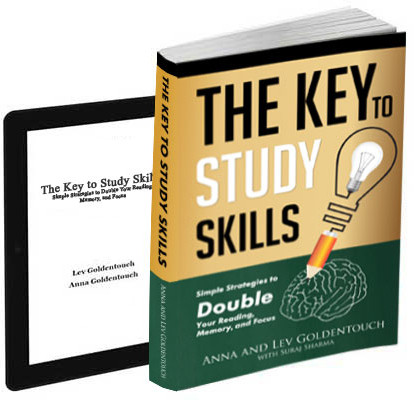
The Key to Study Skills (2nd Edition): Simple Strategies to Double Your Reading, Memory, and Focus presents a practical, research-driven system for speedreading and comprehension. Instead of shortcuts or gimmicks, the book explains how your eyes, brain, attention, and pauses work together during reading, allowing you to increase speed while preserving deep understanding.
By learning metaguiding, suppressing the inner voice, expanding eye span, and managing reading pauses intelligently, you can read faster while staying deeply engaged with the material.
Why Faster Reading Often Leads to Better Understanding
Reading slowly feels safe, but it introduces hidden problems. When pace drops, the mind has time to wander, reread unnecessarily, and fixate on uncertainty instead of meaning. Fast reading, when done correctly, forces attention forward.
Key benefits of maintaining a fast pace include:
- Reduced overthinking about how you read
- Stronger focus on what you read
- Fewer distractions and mental interruptions
- Improved logical flow across paragraphs
Slow rereading in small chunks often breaks the chain of reasoning. In contrast, fast reading encourages rereading only when comprehension truly fails, and then only in larger, meaningful sections.
Speed also adds engagement. When the brain is challenged by pace, boredom disappears. Reading becomes an active process rather than a passive one, similar to racing against time to stay alert and focused.
Metaguiding: Controlling Speed With Your Eyes and Hands
What Is Metaguiding?
Metaguiding is a speedreading technique that uses a physical guide, usually a finger or card, to control reading speed and prevent regressions. Instead of letting your eyes wander or reread, you force them to keep moving forward.
As children, many readers naturally use their fingers to track text word by word. Metaguiding revives this habit but refines it by guiding lines instead of individual words.
The key principle is simple:
- Move the guide slightly faster than your comfortable reading speed
- Let your eyes catch up instead of slowing the guide down
This creates forward momentum and eliminates unnecessary rereading.
When Metaguiding Works Best
Metaguiding assumes:
- You have preread and encoded dense information
- The text is of average difficulty
- The material builds on prior knowledge
Under these conditions:
- Rereading becomes unnecessary
- Reading turns into a smooth, continuous flow
- Markers (mental anchors) are generated naturally
Choosing the Right Metaguiding Tool
Different readers benefit from different tools:
- Finger: Simple and effective for most readers
- Card: Helpful for dyslexia or ADHD by blocking upcoming text
- Continuous scrolling: Effective for digital reading
Programs that flash words one by one are discouraged because they:
- Remove context
- Eliminate speed control
- Create dependency on software
Speed Control and Rhythm
A near-constant speed works best. Slight adjustments are natural:
- Slower at the start of a page to build context
- Slightly slower at the end to ensure understanding
Headings naturally create pauses, which help form section-level markers. If comprehension drops, slow the guide. If comprehension holds, increase speed gradually.
Suppressing the Inner Voice to Break Speed Limits
Why Subvocalization Slows Reading
Most people read at the speed they speak, about 250 words per minute. This is because they mentally pronounce each word. Even the fastest speakers struggle beyond 600 wpm, making vocalization a major bottleneck.
Advanced speedreading replaces words with images and markers, allowing the brain to process meaning without sound.
The Role of Markers
Markers act as conceptual placeholders. Instead of hearing words, the brain manipulates ideas directly. Without fast marker creation, suppressing subvocalization becomes difficult.
This is why subvocalization suppression should only begin once marker creation is already strong.
Progressive Exercises to Reduce Subvocalization
Beginner Level
- Read slowly while counting aloud: 2–4–6–8–10
- Let counting become automatic
- Focus on eye movement, not numbers
Intermediate Level
- Count silently while reading
- Mentally amplify the numbers to drown out words
- Engage the left brain’s serial processing
Expert Level
- Introduce external noise (TV or radio)
- Shift attention between reading and sound
- Train the brain to prioritize visual processing
This training also improves multitasking, as the brain learns to handle parallel inputs efficiently.
Rhythm: The Hidden Key to Endurance and Focus
Why Rhythm Matters
Without rhythm, reading sessions start strong and collapse quickly. Fatigue sets in, speed drops, and focus fades. Rhythm stabilizes effort over time.
Rhythm applies to:
- Eye movement
- Breathing
- Reading speed
- Break timing
Breathing and Reading Synchronization
Breathing directly affects cognition. Controlled breathing improves rhythm and reduces mental strain.
Practical applications include:
- Inhale before a paragraph
- Hold your breath while reading
- Exhale while creating markers
As skill improves, longer sections can be read in a single breath using structured breathing rhythms.
Rhythm at Larger Time Scales
Paragraph-level rhythm prevents immediate forgetting. Page-level rhythm allows short mental rests. Section-level rhythm aligns with the forgetting curve and Pomodoro timing.
Key rules:
- Stop after each paragraph to create markers
- Take 5-minute breaks after 15 minutes of reading
- After one hour, switch activities completely
This prevents overload and supports long-term retention.
Expanding Eye Span to Read More With Less Effort
Understanding Eye Span and Saccades
The eye focuses sharply on a small central area. Everything else is lower resolution. Traditional reading moves this focus word by word, limiting speed and causing strain.
Speedreading trains the brain to extract meaning from peripheral vision, expanding eye span.
A group of words perceived in one fixation is called a saccade.
- Beginners: ~5 words per saccade
- Advanced readers: up to 12 words
With overlap between saccades, entire lines can be read in two fixations.
Speed Potential With Expanded Eye Span
- 7-word saccade → ~3500 wpm
- 12-word saccade → ~5000 wpm
This is the practical upper limit for structured reading. Skimming and scanning can go even faster.
Peripheral reading also reduces eyestrain. If your eyes hurt, technique, not stamina, is the problem.
Training Peripheral Vision With Shultz Tables
What Shultz Tables Train
Shultz tables expand peripheral vision while keeping the eyes fixed in one place. This mirrors real scanning and skimming behavior.
Rules for effective training:
- Find numbers 1–25 silently and in order
- Fix gaze in the center
- Avoid eye movement
- Rest your eyes between tables
The goal is speed with accuracy, not force.
Variations include:
- Visual angle training
- Difference-finding exercises
- Letter-based tables
Developing visual synesthesia can further improve performance.
Managing Pauses With “Negative Time”
Why Pauses Improve Learning
Reading is only a fraction of the learning process. Pauses allow the brain to:
- Consolidate markers
- Reduce strain
- Fill visual gaps during saccades
These micro-pauses are not inefficiencies; they are essential.
Types of Pauses in Reading
- Saccadic masking (microseconds): Marker creation
- Paragraph pauses (~0.5 sec): Marker fixing
- Page pauses (~1 sec): Eye rest
- Section pauses (minutes): Analysis and application
The brain naturally “goes blind” during saccades, and memory fills in the gaps. Conscious use of these pauses increases efficiency without slowing progress.
Practical Pause Strategy
- Pause at logical units (paragraphs), not physical ones (pages)
- Use page turns as micro-rests
- Allow brief daydreaming without guilt
This approach maintains comprehension even at high speeds.
Conclusion: Speedreading as a Complete Learning System
Speedreading is not about racing through pages. It is about controlling attention, perception, rhythm, and recovery. Metaguiding keeps speed steady. Suppressing the inner voice removes bottlenecks. Expanded eye span reduces effort. Smart pauses protect comprehension.
Build a Smarter, More Reliable Way to Learn
All of these proven principles are taught in depth in The Key to Study Skills (2nd Edition): Simple Strategies to Double Your Reading, Memory, and Focus, a practical guide designed to help you build real learning power, not temporary speed. This book breaks complex study challenges into clear, structured systems that improve reading efficiency, memory retention, and sustained focus over time.
For learners who want hands-on practice and step-by-step implementation, KeyToStudy: Memory Masterclass provides a systematic training experience that turns theory into results. Instead of guessing what to do next, you follow a proven, structured path that helps you read smarter, remember more, and retain information with confidence, whether you’re studying for exams, professional growth, or lifelong learning.
This is not about shortcuts or tricks. It’s about transforming the way you read, learn, and retain information so progress becomes predictable and repeatable.
📩 Contact us at [email protected] to receive exclusive discounts on the KeyToStudy: Memory Masterclass and take a decisive step toward mastering your learning potential.

Get 4 Free Sample Chapters of the Key To Study Book
Get access to advanced training, and a selection of free apps to train your reading speed and visual memory