
We like to believe that our decisions are rational, our memories accurate, and our beliefs well-earned. Yet modern psychology and neuroscience tell a far more unsettling story: the human mind constantly edits reality to preserve internal coherence. Our memories shift, beliefs reinforce themselves, and contradictions are quietly erased.
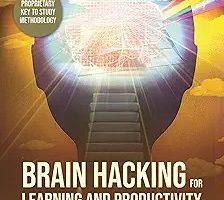
These ideas are explored in depth in the book Brain Hacking for Learning and Productivity: Eidetic Memory, Perception, Acquired Synesthesia, and Lucid Dreaming, which examines how perception, memory, and cognition interact beneath conscious awareness. In this article, we explore how cognitive biases, memory distortion, and cognitive dissonance shape not only what we remember but who we believe ourselves to be.
Understanding these mechanisms is not about self-doubt. It is about intellectual humility, better judgment, and learning how memory truly works.
Cognitive Biases: The Invisible Architecture of Thought
Cognitive biases are not rare flaws; they are structural features of the mind. They shape how we interpret information, evaluate evidence, and make decisions, often without our awareness.
Researchers categorize biases not to limit them, but to reveal patterns in how systematic thinking systematically goes wrong. These mental shortcuts may be efficient, but they come at a cost: our judgments are rarely neutral.
At a fundamental level, biases remind us of something uncomfortable: human thinking is not purely rational. Emotions, context, prior commitments, and subtle environmental cues quietly influence conclusions that feel logical and deliberate.
Psychological Biases: Context Is Stronger Than Logic
Psychological biases include confirmation bias, priming effects, magical thinking, and black-and-white reasoning. These biases demonstrate how easily perception and judgment can be influenced by factors outside conscious awareness.
Small contextual details, such as physical warmth, tone of voice, or social framing, can meaningfully change how we evaluate people and ideas. The brain constantly interprets signals it does not consciously register, then retroactively justifies conclusions as rational.
This raises a deeper question: how much of our “free will” is actually conscious?
While awareness of bias does not eliminate it, it introduces humility, encouraging us to question how confident we should be in our own certainty.
Statistical Biases: When Numbers Lie Convincingly
Statistical biases arise from sampling errors, misleading categories, selective reporting, and poor inference. Unlike psychological biases, these are often hidden behind the appearance of objectivity.
A familiar fallacy occurs when people confuse group statistics with individual probability. From one true statement, the mind leaps to a false generalization, creating distorted beliefs that fuel prejudice and flawed decision-making.
Even science is not immune. Selection bias and false positives quietly distort research findings, especially when replication is discouraged. By the time flawed results are corrected, public belief has already absorbed them. Memory outpaces correction, and the illusion of truth persists.
Social Biases: When Belief Becomes Contagious
Social biases flourish through repetition, groupthink, and shared narratives. When the same claim is repeated often enough, across different voices and platforms, it begins to feel true, even when we intellectually doubt it.
This is the psychological engine of propaganda. Under coordinated social pressure, ordinary individuals can act against conscience, adopting roles and beliefs they would otherwise reject. Social identity becomes stronger than personal judgment.
The unsettling reality is that social belonging can override moral reasoning, reminding us that community, while essential, can also become a powerful instrument of distortion.
Fundamental Biases: When Reality Itself Becomes Unstable
Some biases cut deeper than logic or social influence. These fundamental biases challenge perception, memory, and even the sense of self.
Optical illusions show that perception can be wrong even when we know it is wrong. Memory illusions are more troubling: we can vividly remember events that never occurred, or recall real events in profoundly altered forms.
Psychological research has repeatedly shown that memory is flexible, suggestible, and reconstructive. These biases challenge the assumption that thinking alone guarantees truth. If perception and memory are unreliable, certainty itself becomes suspect.
Memory and Belief: A Self-Reinforcing Loop
Memory and belief exist in a feedback loop. We believe because we remember, and we remember because we believe. This loop stabilizes identity and motivation, allowing us to function without constant doubt.
But when coherence matters more than accuracy, truth becomes negotiable. Beliefs are preserved not because they are correct, but because they are psychologically comfortable.
This explains why people unconsciously adjust memories to maintain consistency. When the loop is threatened, discomfort arises, and the mind moves quickly to restore balance.
Confirmation Bias: The Guardian of Identity
Confirmation bias is the most visible expression of the belief–memory loop. Information that supports existing beliefs is noticed, remembered, and repeated. Contradictory evidence is dismissed or forgotten.
This bias does not reflect low intelligence; it reflects the human need for internal consistency. Changing one’s mind feels like losing part of oneself.
In daily life, confirmation bias protects self-esteem by highlighting successes and minimizing failures. While this maintains confidence, it can also prevent learning, growth, and adaptation.
Cognitive Dissonance: When Beliefs and Memories Collide
Cognitive dissonance emerges when belief and memory conflict. The resulting discomfort can manifest as stress, anger, or denial.
Instead of revising beliefs, the brain often distorts perception of events. Evidence is reinterpreted, minimized, or ignored to preserve the existing narrative.
This process is not limited to ideology or public figures; it operates in everyday decisions. When actions contradict values, the mind invents justifications. Accuracy is sacrificed for psychological relief.
Blame, Bias, and Narrative Protection
When negative events occur, blame is often assigned in ways that confirm existing beliefs. People we already distrust are judged harshly; those we admire receive explanations and excuses.
This selective attribution extends beyond individuals to groups and societies. Collective memory is shaped by what is emphasized, omitted, or reframed. History itself becomes a product of confirmation and dissonance, not neutral recording.
Memory, in this sense, is less about truth and more about continuity, maintaining a stable story of who we are.
True and False Memories: Why Recall Cannot Be Trusted
Memory forms quickly and imperfectly. First impressions solidify before full information is available, and corrections rarely erase the original narrative.
Psychologists describe this as the continued influence effect: even disproven information continues to shape belief and memory.
Each act of recall rewrites the memory. Neuroscience shows that remembering is reconstruction, not playback. Over time, memories become smoother, simpler, and more aligned with identity and social acceptability.
Perception, Illusion, and Sensory Error
Memory begins with perception, and perception itself is unreliable. Attention is selective, context-dependent, and easily manipulated.
Even technological recordings are incomplete, constrained by angle, resolution, and interpretation. Trust in “objective evidence” often mirrors misplaced trust in our senses.
The lesson is not despair, but humility. What feels certain may be nothing more than a convincing illusion.
Engineered and Suppressed Memories
The mind protects itself by reshaping or suppressing painful experiences. Traumatic memories may be distorted, fragmented, or reconstructed in symbolic form.
This adaptive mechanism aids survival but complicates truth-seeking. Eyewitness testimony, often considered definitive, is among the least reliable forms of evidence.
Memory prioritizes coherence over accuracy, allowing us to move forward, even at the cost of precision.
Autobiographical Memory: A Trainable Skill
Despite its flaws, memory can be improved. Techniques such as journaling, reflection, gratitude-based recall, and structured perspective-shifting strengthen autobiographical coherence.
By revisiting events from multiple viewpoints, first-person, second-person, third-person, and contextual, memory becomes richer and less biased.
Breaking experiences into components (situation, emotion, thought, action) reduces distortion and improves judgment over time.
Why We Remember, and Why We Forget
Remembering everything is not necessarily a gift. Individuals with Highly Superior Autobiographical Memory (HSAM) cannot escape their past; painful moments replay endlessly.
For most people, forgetting is merciful. Memory’s flexibility allows healing, adaptation, and growth. We remember what suits the narrative, and sometimes that is exactly what allows us to live well.
Memory is not a record of reality. It is a story that gives life meaning.
Conclusion: Memory as a Tool, Not a Mirror
Memory does not exist to preserve truth; it exists to preserve continuity. It is a narrator, not an archivist.
By understanding cognitive bias, dissonance, and memory reconstruction, we gain freedom, not from bias itself, but from blind trust in our certainty. The goal is not perfect accuracy, but conscious humility.
Ready to Upgrade How Your Brain Learns and Remembers?
If the ideas in this article sparked your curiosity, you’ll find a much deeper, more powerful exploration in the book Brain Hacking for Learning and Productivity: Eidetic Memory, Perception, Acquired Synesthesia, and Lucid Dreaming.
This book takes you beyond theory and into the hidden mechanics of memory, belief, perception, and focus, showing you how the mind really works and how you can train it intentionally, not accidentally.
Turn Insight Into Skill with ProlificFocus
Reading builds understanding, but training builds transformation.
If you want practical systems, guided exercises, and real-world methods to sharpen focus, strengthen memory, improve wellbeing, and optimize sleep, the ProlificFocus: Wellbeing, Hobbies and Sleep-Hacking Masterclass is designed exactly for you.
This course brings together cognitive science, memory training, and mental performance techniques in a structured, easy-to-follow format you can apply immediately.
Want a special offer?
📩 Email us at: [email protected]
Take control of how your mind learns, remembers, focuses, and decides, instead of letting cognitive bias and mental noise do it for you.

Get 4 Free Sample Chapters of the Key To Study Book
Get access to advanced training, and a selection of free apps to train your reading speed and visual memory