This is something new I want to try: in-depth discussions about some prominent figures in superlearning world and their tools. This lecture also comes with a free valuable resource you can use from Dr. Anthony Metivier: the free memory improvement kit. Also, this has been an amazing year for Dr. Anthony Metivier. Read all about …
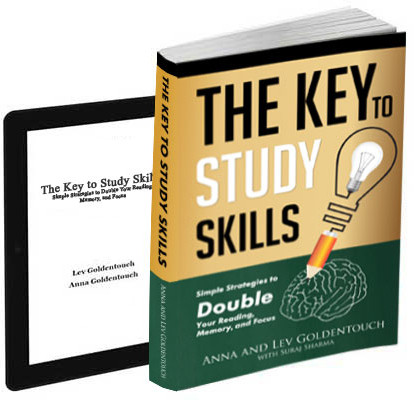
KeyToStudy Offers:
Memory, Speedreading, and Analysis
KeyToStudy Overview:
Memory, Speedreading, and Analysis
ProlificFocus Overview:
Productivity, Motivation, and Projects
ProlificFocus Offers:
Productivity, Motivation, and Projects
Number pyramid game
Chunking is not a simple skill to master. One exercise to learn chunking is number pyramid. The game is a bit hard to understand, so I will explain it slowly. We generate the number pyramid by writing random digits. These digits are then summed pair-wise. See e.g. this page. As a result, we get a …
Revealing your state of mind by handwriting
Many memory specialists, including Anna and Anthony Metivier, recommend taking notes and writing flash cards using your handwriting. When we review our handwritten notes, we remember not just the information we needed, but also some information regarding our personal associations when writing the notes. While some of the cues we use are vague, some follow …
Continue reading “Revealing your state of mind by handwriting”
Dual coding theory and practice
Classical dual coding theory involves simultaneous usage of visual and audio processing of information. It is practiced to improve our long-term memorization and creativity. This is a basic article that concerns any learning activity. I thought I wrote it ages ago, and I then could not find the text. So I will write a new …
Forgetting and relearning
We learn many things. Some things we use repeatedly and remember them even better. Some things become irrelevant, so we need to adapt and relearn them. Other things we simply forget. Do the things we forgot haunt our memories? This post is inspired by this article. The long term memory and the short term memory …
Making your own story
A good way to generate long-term retention is building a great story. Our autobiographical memory is usually very good, and we remember the stories we own for a long time. This post has been inspired by this, this and this articles. Who should use it? Most of us can remember stories very well. Some of …
Using flash cards
Using regular visualization methods, we can remember something for days, but we will forget the information eventually unless we review the information from variors perspectives or use additional methodology for long-term retention. When we need to remember something for years and years we have several choices. One of the more popular solutions are flash cards. …
Your life as a story: using autobiographic memory
Quite often we can view our life as a story. People often tell that before the clinical death they could see their whole life passing before their eyes. This is the autobiographic memory in action. Autobiographic memory is very important in our life. We can train it, we can use it to remember other things, …
Continue reading “Your life as a story: using autobiographic memory”
Long term memory and sleep
One thing that bothers me with long-term memory is the need to review the flashcards or mental palaces or other memory structures. Most memory experts I know use spaced repetitions constantly. Since I use slightly different tools, I use spaced repetitions only for very specific issues, and when I use it I do not like …
Physical switches in our brain
Our brain is a physical object, and its reactions are physical. We may attribute our memories and experiences to some spiritual and intellectual domain, which is perfectly fine. Sometimes, however, it is best to attribute our experiences to misinterpreted physical experiences. For example, if you have a bad gut feeling, it is probably a heartburn …