

Most people believe that better learning starts with reading faster. In reality, it starts before reading at all. Prereading is the overlooked cognitive skill that determines whether a text becomes meaningful knowledge or quickly forgotten information.
In The Key to Study Skills (2nd Edition): Simple Strategies to Double Your Reading, Memory, and Focus, prereading is presented as a foundational strategy that reshapes how the brain processes text. Instead of jumping directly into reading, prereading prepares attention, filters relevance, and builds mental structures that make comprehension and memory significantly more effective.
This article explores how prereading works, why it matters, and how it can be applied across articles, books, technical material, and even complex code, helping learners read with purpose, clarity, and control.
What Is Prereading and Why It Matters
Prereading is the intentional process of scanning and skimming a text before reading it in depth. Its goal is not comprehension but orientation. During prereading, the reader gathers structure, identifies key elements, and decides how the text should be approached.
This process typically involves:
- Scanning to decide whether a text is worth reading
- Skimming to build an inventory of topics, names, dates, and structure
- Creating mental markers that will later support comprehension and recall
Prereading allows reading itself to become more focused, deliberate, and efficient. Instead of reacting emotionally or cognitively to new information, the reader enters the text with a prepared framework.
The Core Benefits of Prereading
Prereading exists for several essential cognitive reasons, each contributing to stronger comprehension and memory.
Separating Content From Emotional Noise
When reading without preparation, the brain often reacts to ideas, associations, or emotions triggered by the text. Prereading removes this distraction in advance, allowing full focus on content during actual reading.
Preparing for Variable Reading Speed
True comprehension requires changing reading speed. Names, dates, definitions, and formulas demand pauses, while familiar or descriptive sections can be read quickly. Since adjusting speed mid-reading is difficult, prereading identifies where slower reading will be needed.
Creating Mental Frameworks
Many memory techniques rely on themes, settings, or structured markers. Prereading helps establish these frameworks early, making later encoding more efficient and less mentally taxing.
Filtering Relevance
Not all information deserves equal attention. During prereading, readers decide which sections require deep focus, which can be skimmed, and which can be skipped entirely.
Prereading in Practice Across Different Text Types
Prereading is flexible and adapts to the type of material being consumed.
Prereading News and Blog Articles
News blogs are ideal for training pre-reading skills. The process typically begins with the title, followed by a rapid scan of the excerpt. Only content that shows promise is opened for deeper review.
Entire articles are then preread at a very high speed to evaluate value. If useful, key sections are reread more slowly, while irrelevant content is discarded. This layered approach ensures efficient use of attention and time.
Repeated exposure at varying speeds significantly improves long-term retention without requiring extended study sessions.
Prereading Technical Articles
Technical articles often contain valuable insights scattered throughout dense material. Prereading the entire text at high speed allows the reader to identify promising sections without committing to full comprehension immediately.
After selecting the most relevant articles, targeted rereading focuses on important areas, definitions, and formulas. Slower speeds are used only where precision is required. This structured progression prevents cognitive overload and supports deeper understanding.
Once multiple articles are reviewed, a final pass integrates ideas into a coherent mental model.
Prereading Long and Complex Books
Books demand a systematic approach. Prereading allows readers to locate relevant sections before investing significant time.
The process includes:
- Rapid prereading of introductions and headings
- Mentally marking interesting sections without slowing down
- Revisiting selected sections at moderate speed
- Slowing down only for difficult concepts
- Occasional fast rereading to unify understanding
This approach prevents fatigue, supports memory consolidation, and ensures that effort is spent where it delivers the most value.
Prereading Computer Code
Prereading is not limited to written text. It plays a crucial role in understanding computer code.
Instead of line-by-line analysis, prereading focuses on identifying structure, segment boundaries, and functional components. Large codebases are broken into manageable sections, each associated with a mental marker.
Once orientation is achieved, navigating and modifying code becomes faster and more accurate. Debugging and integration then rely on these pre-established mental maps.
From Prereading to Technical Writing
Effective technical writing is a direct extension of prereading. Once mental markers are established, documentation becomes a process of translating structured understanding into clear explanations.
Rather than writing linearly, information is organized around markers, allowing clarity, coherence, and logical flow. This method supports presentations, specifications, and professional documentation without unnecessary effort.
Sentence-Level Prereading: Extracting Meaning Efficiently
Not all words contribute equally to meaning. Sentence-level prereading focuses on identifying the words that carry the most informational weight.
Depending on the goal, this may include:
- Verbs for events and actions
- Nouns for definitions and concepts
- Adjectives for opinions and experiences
By selectively focusing on the most relevant word types, long passages can often be summarized to one-quarter of their original length while retaining approximately 70 percent of the meaning.
Applying the Pareto Principle to Reading
The Pareto principle states that 80 percent of meaning is conveyed by 20 percent of words. Prereading operationalizes this principle by training the reader to identify those critical words quickly.
This approach improves efficiency, enhances retention, and prevents unnecessary cognitive load, especially in dense or repetitive material.
Consciousness and Attention Dissociation (CAD)
One of the most significant barriers to effective reading is the separation of attention and consciousness. This occurs when attention remains on the text while consciousness drifts toward self-evaluation, doubt, or unrelated thoughts.
This dissociation reduces speed, weakens memory, and often leads to frustration. As details are missed, consciousness becomes increasingly self-focused, creating a feedback loop that further impairs performance.
Breaking the Paralysis by Analysis
Several strategies help restore alignment between attention and consciousness:
- Reading enjoyable material to reduce performance pressure
- Separating reading from analysis instead of attempting both simultaneously
- Increasing reading speed to prevent mental wandering
Paradoxically, faster reading can improve focus and retention by leaving less room for intrusive thoughts.
Visual Associations and the Stroop Effect
Mental markers created during prereading rely heavily on visual associations. These associations, while powerful, are susceptible to distortion.
The Stroop effect demonstrates that conflicting visual information slows processing and increases errors. When visual cues align with meaning, comprehension is faster and more accurate. When they conflict, confusion arises.
This reinforces the importance of clear, consistent markers during prereading.
Avoiding the Trap of Prejudging Texts
Prior knowledge can both help and hinder comprehension. When expectations align with content, understanding improves. When they conflict, readers may unconsciously distort meaning or overlook nuance.
Speedreading increases this risk. Prereading helps counteract it by encouraging observation before interpretation, allowing the text to reveal its structure on its own terms.
Why Prereading Is Not Reading
Prereading is often misunderstood as extreme speedreading. While very high speeds can provide surface-level familiarity, they cannot support detailed comprehension or deep learning.
Prereading gathers information quickly. Reading builds understanding slowly and deliberately. Confusing the two leads to missed details and false confidence.
True mastery comes from knowing when to preread and when to read.
The True Foundation of Prereading
Prereading is about maximizing efficiency without sacrificing depth. It allows readers to extract value quickly, then slow down only when necessary.
If details are not remembered, the solution is not to speed up further, but to return and read properly. Prereading guides this decision-making process and ensures that effort aligns with importance.
Conclusion: Turning Reading Into a Strategic Skill
Prereading is not a shortcut. It is a strategy that transforms reading into a deliberate, controlled, and effective cognitive process. By preparing attention, structuring information, and reducing mental friction, prereading enables deeper understanding in less time.
If you want to master prereading and other high-impact learning strategies, The Key to Study Skills (2nd Edition): Simple Strategies to Double Your Reading, Memory, and Focus provides a complete framework for building these skills systematically.
To accelerate your progress further, explore the KeyToStudy: Memory Masterclass, where these principles are applied step by step in a practical, structured format.
For exclusive course discounts, contact us directly at [email protected] and start transforming the way you read, learn, and remember.

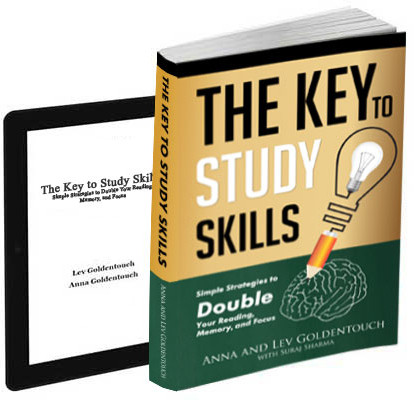
Get 4 Free Sample Chapters of the Key To Study Book
Get access to advanced training, and a selection of free apps to train your reading speed and visual memory