
Modern productivity culture often treats thinking as wasted time. If you are not acting, producing, or checking tasks off a list, you are seen as falling behind. Yet some of the most powerful breakthroughs in history emerged not from relentless action, but from intentional pauses, wandering thoughts, and reflective mental states.
In this article, we explore how rumination enhances productivity through creative procrastination, meditative focus, the prepared mind, and brain writing. These concepts reveal how thinking, when used correctly, becomes a productive act rather than a distraction.
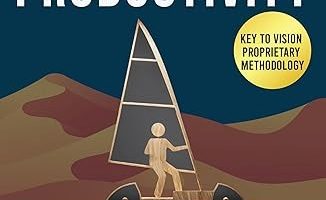
If you want to master this state fully, these ideas are explored in depth in the book THREE STATES OF TRIPLE PRODUCTIVITY: Harness Multitasking, Rumination and Flow.
Understanding Rumination as a Productivity State
Rumination is often misunderstood as overthinking or mental stagnation. In reality, productive rumination is a deliberate cognitive process where the mind revisits ideas repeatedly, allowing insights to surface gradually rather than through force.
Instead of demanding immediate solutions, rumination gives problems space to evolve. This process enables connections to form between unrelated ideas, memories, and knowledge structures. Productivity, in this sense, is not about speed, but about depth.
Rumination serves three essential functions:
- It reduces cognitive pressure, allowing the brain to recover from intense focus.
- It enhances creativity by enabling nonlinear thinking.
- It prepares the mind to recognize opportunities when they appear.
This state becomes especially powerful when paired with intentional techniques, beginning with creative procrastination.
Creative Procrastination: Letting Ideas Mature
Procrastination is usually framed as a failure of discipline. However, introduce a critical distinction between avoidance-based procrastination and creative procrastination.
Creative procrastination is not about escaping work. It is about postponing execution while continuing mental engagement. During this phase, the mind keeps processing a problem subconsciously, refining it without active effort.
Instead of forcing premature decisions, creative procrastination allows:
- Ideas to incubate naturally
- Hidden constraints to surface
- Better solutions to replace rushed ones
Many breakthroughs occur not during intense work sessions, but afterward, when the mind is relaxed enough to reorganize information freely.
Creative procrastination is most effective when it is intentional. It requires trust in the thinking process rather than guilt about delayed action.
Rumination as Mental Recuperation
Another overlooked aspect of rumination is its recuperative function. Just as muscles require rest after exertion, the brain needs low-intensity cognitive states to recover from sustained focus.
Rumination operates as a form of mental recovery by:
- Reducing stress associated with forced productivity
- Allowing cognitive resources to replenish
- Preventing burnout caused by continuous task-switching
This restorative effect is what makes rumination sustainable. Instead of depleting mental energy, it preserves it, preparing the mind for future deep work or flow states.
Meditative Focus: Thinking Without Forcing
Meditative focus represents a structured form of rumination. Unlike traditional concentration, it does not aim to control thoughts aggressively. Instead, it allows attention to move gently around a single idea.
This approach is similar to walking meditation, where movement exists without urgency. The goal is not to arrive at an answer immediately, but to remain present with the question.
Meditative focus helps by:
- Reducing resistance to complex problems
- Allowing insights to surface organically
- Maintaining awareness without pressure
This form of thinking is especially valuable when dealing with ambiguous or ill-defined problems, situations where logic alone cannot provide clarity.
The Prepared Mind: Openness Meets Knowledge
One of the most critical principles introduced is the idea of the prepared mind. Insight does not arise randomly. It occurs when openness meets accumulated knowledge.
A prepared mind has two defining qualities:
- Depth of understanding within a domain
- Openness to unexpected connections
Without preparation, opportunities pass unnoticed. Without openness, knowledge becomes rigid. Rumination bridges this gap by allowing stored knowledge to reorganize itself in new ways.
This principle explains why many people encounter opportunities but fail to recognize them. Insight requires both readiness and reflection.
The Cost of Unprepared Thinking
Missed opportunities are often not due to lack of access, but lack of cognitive readiness.
When individuals rely solely on immediate action or rigid thinking patterns, they overlook signals that do not fit existing expectations. Rumination counteracts this limitation by loosening mental structures and encouraging reinterpretation.
By revisiting ideas repeatedly, the mind becomes more sensitive to emerging patterns, making recognition possible where others see noise.
Brain Writing: Externalizing Thought for Deeper Reflection
While rumination occurs internally, brain writing provides a method to externalize thought without disrupting its flow. Unlike traditional note-taking, brain writing focuses on capturing raw ideas without evaluation.
The process emphasizes:
- Writing freely without editing
- Recording incomplete or unclear thoughts
- Revisiting notes over time to observe evolution
This technique enhances rumination by creating a feedback loop between the mind and external memory. Ideas are no longer lost or forgotten; they are stored, revisited, and refined.
Brain Writing and Neuroplasticity
Brain writing is closely connected to neuroplasticity, the brain’s ability to rewire itself through repeated patterns. Writing ideas repeatedly reinforces neural connections, making insights more accessible over time.
This practice:
- Strengthens idea retention
- Improves conceptual clarity
- Encourages deeper reflection during future rumination sessions
Rather than seeking immediate clarity, brain writing allows clarity to emerge gradually through repetition and review.
Reflection Loops: How Insight Evolves
A key outcome of brain writing is the creation of reflection loops. These loops occur when ideas are revisited multiple times, each time gaining additional depth or perspective.
Reflection loops enable:
- Continuous refinement of thinking
- Identification of weak assumptions
- Discovery of hidden relationships
Rumination becomes productive when it is cyclical rather than static. Each return to an idea deepens understanding rather than repeating confusion.
Practical Takeaways From Rumination
Several actionable principles emerge:
- Delay execution when ideas are unclear, but stay mentally engaged
- Use meditative focus to explore problems without forcing solutions
- Build a prepared mind through continuous learning and openness
- Externalize thoughts using brain writing to support reflection
- Revisit ideas intentionally to activate reflection loops
These practices transform thinking into a legitimate productivity tool rather than a passive activity.
Conclusion: Thinking Is Not Wasted Time
Rumination challenges the belief that productivity equals constant action. Instead, it reframes thinking as a form of work, one that prepares, restores, and innovates simultaneously.
By mastering creative procrastination, meditative focus, a prepared mind, and brain writing, individuals gain access to a deeper layer of productivity, one that operates beneath visible effort but produces lasting results.
Ready to Unlock Your Highest Productivity State?
If the ideas in this article resonated with you, they are explored in much greater depth in my book THREE STATES OF TRIPLE PRODUCTIVITY: Harness Multitasking, Rumination and Flow. The book shows how rumination works alongside multitasking and flow to help you think deeply, create intelligently, and work without burnout.
To turn these concepts into daily habits, I invite you to join my course: ProlificFocus: Productivity Masterclass (Time Management, Multitasking and Flow), a structured system designed to help you apply these principles practically and consistently.
Want a special discount on the course?
Simply reach out to me at [email protected], and I’ll be happy to help.
Because true productivity doesn’t start with doing more work,
It starts with thinking better, resting smarter, and creating with intention.


Get 4 Free Sample Chapters of the Key To Study Book
Get access to advanced training, and a selection of free apps to train your reading speed and visual memory