

The ability to “teach yourself how to learn” is among the most important abilities you can acquire in the modern world. Learning on your own begins with four essential commitments: creating a clear vision that guides your journey, diving deep into topics beyond surface-level understanding, critically evaluating which accelerated learning techniques are worth pursuing, and committing to active learning strategies over the long term. These commitments help you move beyond the illusion of progress that passive learning often creates. Studies show that learners who engage actively with material retain and understand far more than those who passively consume information. Mastering self-learning means embracing challenges, thinking critically, and pushing yourself out of your comfort zone. By actively engaging with the process and following proven strategies, you can transform your approach to education and achieve expertise in any skill or subject.
1. Structure Your Goals with Precision
Before diving into any learning endeavor, spend an epic amount of time structuring your goals. Vague aspirations like “I want to learn programming” or “I want to master photography” lack direction. Instead:
- Break down your overarching goal into smaller, actionable objectives.
- Use frameworks like SMART (Specific, Measurable, Achievable, Relevant, Time-bound) to define your targets.
- Prioritize tasks by their impact and relevance to your ultimate goal.
For example, if your goal is to learn a new language, outline milestones like “learn 50 new vocabulary words per week” or “practice speaking with a language partner for 30 minutes daily.” A well-structured plan is the first step toward success.
2. Hunt for Resources Strategically
In the age of information, reasonable resource hunting is essential. The internet offers an abundance of learning materials, but not all of them are created equal. Here’s how to identify the best resources:
- Start with reputable platforms like Coursera, Khan Academy, or academic journals.
- Make use of evaluations and suggestions from professionals in your field of choice.
- Explore diverse formats—books, podcasts, videos, and hands-on workshops—to find what resonates best with your learning style.
- Don’t overlook community-driven resources like forums, discussion groups, and social media communities.
By filtering resources effectively, you’ll save time and focus only on high-quality content.
3. Leverage Cutting-Edge Learning Tools and Techniques
Leverage the potential of educational resources to accelerate your development. Spaced repetition systems (SRS) like Anki and Quizlet are excellent for retaining information over time. Additionally:
- Use mind-mapping tools like MindMeister to visually organize concepts.
- Explore note-taking apps like Notion or Evernote for structured study sessions.
- Incorporate gamified learning apps such as Duolingo or Khan Academy to keep motivation high.
Combine these tools with deliberate practice for exponential growth.
4. Master Active Learning
Passive learning, like skimming through a book or watching videos without engagement, doesn’t lead to mastery. Instead, focus on active learning:
- Make notes and provide your own summary of the main ideas.
- Ask questions and seek answers while studying.
- Test yourself regularly to reinforce understanding.
- Teach others what you’ve learned—this process solidifies your grasp of the material.
Active engagement not only improves retention but also enhances critical thinking skills.
5. Optimize Your Online Searches
In the digital age, the ability to extract information efficiently is vital. Use this search hack to maximize your results:
- Utilize quotation marks (“”) to find exact phrases.
- Add “filetype:pdf” or “site:.edu” to locate specific document types or academic sources.
- Exclude irrelevant results using the “-” operator.
- Leverage advanced search tools on platforms like Google Scholar to access peer-reviewed research.
These techniques will help you navigate the overwhelming sea of online information with ease.
6. Anticipate Challenges Before They Arise
Imagine potential obstacles and plan solutions in advance. Anticipating challenges equips you with the resilience to keep moving forward. Ask yourself:
- What could derail my progress? (e.g., time constraints, lack of motivation)
- How will I overcome these barriers? (e.g., create a study schedule, set reminders)
- What tools or strategies can I use to stay consistent? (e.g., habit-tracking apps, accountability partners)
By preparing for setbacks, you’ll reduce their impact and maintain momentum.
7. Study with Ethics and Honesty
Ethical studying and radical honesty are non-negotiable in self-learning. Avoid shortcuts or practices that undermine your growth, such as plagiarism or relying solely on summaries. Instead:
- Commit to understanding concepts deeply rather than memorizing surface-level details.
- Evaluate your knowledge honestly by testing yourself under realistic conditions.
- Reflect on your progress and identify areas for improvement without bias.
True learning happens when you’re authentic and transparent about your efforts.
8. Embrace Failures as Stepping Stones
Failure is a necessary component of learning, not the finish. Adopting this mindset allows you to:
- Analyze mistakes to identify what went wrong.
- Adjust your approach to prevent repeating errors.
- To maintain motivation, acknowledge and celebrate minor accomplishments along the road.
Remember, every expert was once a beginner who failed repeatedly but kept going.
9. Cultivate Adaptability as a Lifelong Learner
Flexibility is the cornerstone of effective learning. To become adaptable:
- Replace the all-or-nothing attitude with incremental learning steps.
- Step outside your comfort zone to gain real-world experience.
- Develop a growth mindset that welcomes challenges and uncertainty.
- Embrace ambiguity and be comfortable with not having all the answers immediately.
- Adjust to limitations like time or resource constraints by finding creative solutions.
- Practice intellectual humility by admitting when your knowledge is outdated or incorrect.
Adaptability might be challenging to develop, but it’s the most crucial skill for lifelong learning.
10. Build a Feedback Loop for Continuous Improvement
The 10th and final strategy is creating a robust feedback loop. Here’s how:
- Regularly review your performance against set goals.
- Seek constructive feedback from peers, mentors, or online communities.
- Use data-driven insights to tweak your strategies and refine your learning process.
A continuous cycle of action, reflection, and improvement ensures that your efforts lead to lasting results.
Cultivating Flexibility: The Key to Lifelong Learning
Flexibility as a learner means developing the ability to adapt to various challenges and environments. It involves:
- Letting go of rigid, all-or-nothing thinking and embracing incremental progress.
- Seeking real-world experiences that push you beyond your comfort zone.
- Cultivating a growth mindset that thrives on challenges and learning from failures.
- Becoming comfortable with uncertainty and learning to make decisions with incomplete information.
- Adjusting to constraints such as limited time, money, or resources by finding alternative solutions.
- Practicing humility and acknowledging when you need to revisit and revise your understanding.
Becoming a flexible learner is not effortless, but it is transformative. This adaptability, combined with a strong memory and the ability to learn independently, is a skill set that will serve you throughout life.
Final Thoughts
“Teach yourself how to learn”, and you’ll unlock endless opportunities for growth and success. The strategies outlined here are designed to help you develop a strong foundation for self-education, whether you’re pursuing professional goals, personal interests, or both. By setting clear objectives, leveraging the right tools, and maintaining adaptability, you can overcome challenges and continually refine your approach. Active learning, ethical study habits, and embracing failure will ensure your efforts lead to meaningful progress. Ultimately, the path of self-learning is transformative, offering limitless potential for personal and intellectual achievement.
“Teach yourself how to learn”, and you’ll unlock endless possibilities for growth and success. By combining these 10 strategies with persistence and curiosity, you can master any skill or topic. Remember, the journey of learning is as important as the destination. Embrace it fully, and the rewards will be immeasurable.

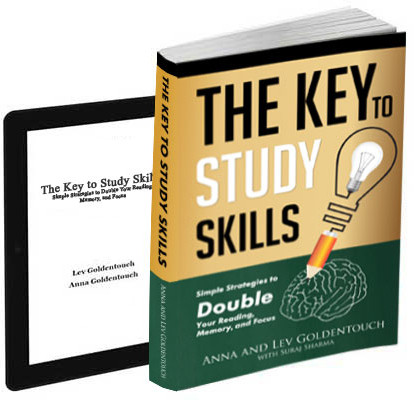
Get 4 Free Sample Chapters of the Key To Study Book
Get access to advanced training, and a selection of free apps to train your reading speed and visual memory