
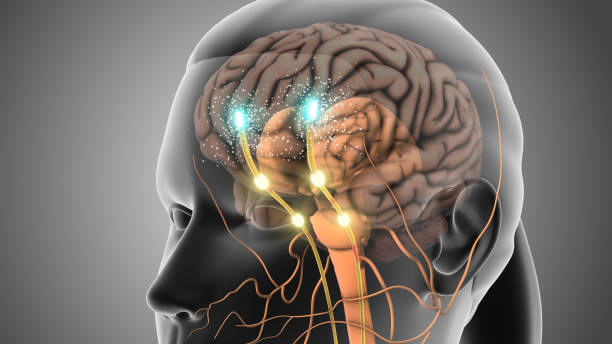
In a world where information overload is the norm, mastering efficient study techniques has become crucial. Whether you’re a student, a professional, or someone who simply enjoys learning, finding ways to retain information better is a universal challenge. One technique that has garnered attention for its effectiveness is active recall. Unlike passive learning methods, active recall pushes your brain to retrieve information from memory, thereby strengthening your understanding and retention of the material. But what exactly is active recall, and does it truly help to boost memory? This article delves into the science and practice of active recall, exploring its origins, benefits, and ways to integrate it into your learning routine.
What Is Active Recall?
Active recall is a learning technique that involves actively stimulating memory during the learning process. Instead of passively re-reading or reviewing material, active recall requires you to generate information from your memory. For instance, rather than simply reading a textbook, you might quiz yourself on key concepts or try to explain a topic in your own words. This method is rooted in the idea that the effort involved in recalling information strengthens neural connections, making it easier to retrieve the same information in the future.
The process of active recall can be broken down into a few simple steps:
- Exposure to Material: Initially, you expose yourself to new information through reading, listening, or observing.
- Attempt to Recall: After the initial exposure, you put the material away and try to recall the key points from memory.
- Feedback and Review: Check your recall against the original material. This step helps you identify gaps in your knowledge.
- Repeat: Repeating the process over time helps reinforce the memory.
This technique is powerful because it engages your brain in a way that passive methods like re-reading or highlighting do not. The act of trying to recall information forces your brain to work harder, which in turn strengthens your memory and understanding of the material.
Is Active Recall Truly Effective?
The effectiveness of active recall is backed by numerous studies in cognitive psychology and education. Research shows that active recall can significantly enhance long-term memory retention compared to passive study techniques. But how exactly does it work, and why is it so effective?
One of the primary reasons active recall works is because it aligns with how our memory systems are designed. Our brains are wired to forget information that is not regularly used or recalled. This phenomenon, known as the “forgetting curve,” shows that our memory of new information rapidly declines if it is not actively reinforced. By using active recall, you interrupt the forgetting curve and strengthen your ability to remember the material.
Moreover, active recall promotes deeper cognitive processing. When you try to recall information without looking at your notes, you’re not just passively absorbing content; you’re engaging in a mental struggle that forces your brain to make connections and understand the material on a deeper level. This deep processing is what leads to better retention and understanding.
In addition to improving memory, active recall has been shown to enhance critical thinking and problem-solving skills. When you’re forced to recall information, you often have to think critically about how that information relates to other concepts you’ve learned. This helps you build a more integrated and comprehensive understanding of the subject matter.
History of Active Recall
Active recall is not a new concept; it has roots that can be traced back to ancient educational practices. The method has been employed by scholars and educators for centuries, though it has evolved over time with the advancement of cognitive science.
In ancient Greece, the philosopher Socrates used a form of active recall known as the “Socratic method,” where he would ask his students questions that required them to recall and apply knowledge rather than simply recite facts. This method was designed to promote critical thinking and deep understanding, principles that are at the core of active recall.
The concept of active recall gained further traction in the early 20th century with the development of the “testing effect,” a phenomenon where taking a test on material improves long-term retention more than simply studying it. This effect was first documented by psychologists like Hermann Ebbinghaus, who studied memory and the forgetting curve.
As educational psychology advanced, researchers began to systematically study the benefits of active recall. In the 1960s and 1970s, studies on the “generation effect” found that people remember information better when they generate it themselves, rather than simply reading it. This effect is a key component of active recall, where the learner is actively involved in retrieving information.
Today, active recall is widely recognized as one of the most effective study techniques, supported by decades of research and practical application in educational settings.
How Active Recall Is Effective in Any Language
One of the remarkable aspects of active recall is its universality. The technique works effectively across different languages, making it a versatile tool for learners worldwide. But why does active recall work in any language, and what does this reveal about the nature of memory?
Memory processes are fundamentally the same across languages. Regardless of whether you’re recalling information in English, Spanish, Chinese, or any other language, the underlying cognitive mechanisms are similar. When you engage in active recall, you’re tapping into these universal memory processes.
Moreover, active recall is effective because it involves multiple levels of processing. When recalling information in a second language, for example, you’re not just retrieving the content; you’re also practicing language skills such as vocabulary, grammar, and syntax. This dual processing reinforces both the memory of the content and your language abilities.
Active recall also works across languages because it relies on the principle of retrieval practice, which is a universal cognitive process. Retrieval practice involves bringing information to mind, which strengthens the neural pathways associated with that information. This process is not dependent on the language of the information but rather on the cognitive act of recalling it.
The effectiveness of active recall across languages also highlights the importance of context in memory. When you practice active recall in a foreign language, you’re often forced to think about the meaning of words and phrases in context, which deepens your understanding and retention of the material.
Integrating Passive Study Techniques with Active Recall
While active recall is highly effective, it can be challenging to implement, especially if you’re accustomed to more passive study techniques. However, it’s possible to use passive study methods as a stepping stone to mastering active recall. Here are some common passive techniques and how they can be adapted for active recall:
- Re-reading: Instead of simply re-reading your notes, try reading a passage and then putting the material away to recall the key points. You can also turn the headings and subheadings in your notes into questions and quiz yourself.
- Highlighting: Highlighting can be useful, but instead of passively marking text, highlight key concepts and then close the book to recall why those concepts are important. This turns a passive activity into an active one.
- Summarizing: Writing summaries of what you’ve learned is a common passive technique. To make it active, write a summary without looking at your notes, and then compare it to the original material.
- Listening to lectures: Listening to recorded lectures can be passive, but you can turn it into an active recall exercise by pausing the lecture periodically and summarizing what you’ve just heard from memory.
- Flashcards: Flashcards are a popular tool for active recall, but they can also be used passively if you simply read them. To make flashcard use more active, try recalling the answer before flipping the card over.
By adapting these passive techniques, you can ease into active recall and gradually make it a central part of your study routine.
The Importance of Mastering Active Recall
Mastering active recall is not just a helpful study tool; it’s essential for anyone looking to improve their learning and memory. But why is it so important, and what benefits does it offer over other techniques?
Firstly, active recall is one of the most efficient ways to learn. Because it directly engages your memory, it allows you to retain more information in less time compared to passive study methods. This efficiency is particularly valuable for students and professionals who need to absorb large amounts of information quickly.
Secondly, active recall helps to build a deeper understanding of the material. When you actively try to recall information, you’re forced to think critically about it and make connections between different concepts. This deeper processing leads to better retention and the ability to apply what you’ve learned in new situations.
Active recall also promotes long-term retention. The process of retrieving information from memory strengthens the neural pathways associated with that information, making it easier to recall in the future. This is particularly important for subjects where long-term retention is crucial, such as language learning or medical studies.
In addition, mastering active recall can boost your confidence. As you become more adept at recalling information, you’ll find that you’re better prepared for exams, presentations, and other situations where you need to demonstrate your knowledge. This confidence can lead to better performance and reduced anxiety.
Finally, active recall is a versatile tool that can be applied to almost any subject or skill. Whether you’re learning a new language, studying for a professional exam, or trying to memorize a sales script, active recall can help you achieve your goals more effectively.
Active Recall + Spaced Practice = Supercharged Learning
While active recall is a powerful technique on its own, its effectiveness can be significantly enhanced when combined with another proven study method: spaced practice. Together, these techniques create a “supercharged” learning process that maximizes retention and understanding.
Spaced practice, also known as distributed practice, involves spreading out your study sessions over time rather than cramming all at once. This method takes advantage of the spacing effect, a cognitive phenomenon where information is better retained when study sessions are spaced out over time. When combined with active recall, spaced practice ensures that you’re not only recalling information but doing so at optimal intervals for long-term retention.
Here’s how the combination works:
- Initial Learning: Start by learning the material through active recall. This could involve reading a chapter and then quizzing yourself on the key points.
- First Review: After a short period, say a day or two, review the material again using active recall. The spacing ensures that you’re recalling the information just as your brain begins to forget it, which strengthens your memory.
- Subsequent Reviews: Continue to review the material at increasing intervals—perhaps after a week, then two weeks, and so on. Each review should involve active recall, forcing your brain to retrieve the information repeatedly over time.
The combination of active recall and spaced practice leverages the strengths of both techniques. Active recall engages your memory and deepens understanding, while spaced practice ensures that the information is retained over the long term. This combination is particularly effective for subjects that require mastery and long-term retention, such as learning a language, studying for a major exam, or mastering a new skill.
Creative Ways to Make Active Recall Engaging for the Brain
While active recall is undoubtedly effective, it can sometimes feel repetitive or even tedious. However, there are ways to make the process more engaging and enjoyable for your brain. By incorporating variety and creativity into your active recall practice, you can keep your brain stimulated and make learning more fun.
- Gamify the Process: Turn your active recall sessions into a game. You can create flashcards and quiz yourself, keeping score to see how much you improve over time. You might also use apps that incorporate gamification elements, like earning points or badges for completing quizzes.
- Use Visual Aids: Visual aids like mind maps, diagrams, and charts can make active recall more engaging. After studying a topic, try to recall the information by drawing a mind map from memory. This not only reinforces the material but also taps into your visual memory.
- Teach Someone Else: Teaching is a powerful form of active recall. Explain what you’ve learned to a friend, family member, or even to yourself out loud. Teaching forces you to recall and articulate information, making it a highly effective way to reinforce learning.
- Incorporate Movement: Physical activity can enhance cognitive function and make learning more enjoyable. Try combining active recall with light exercise, such as walking while quizzing yourself or using a standing desk while reviewing material.
- Use Creative Prompts: Instead of straightforward recall, use creative prompts to challenge your memory. For example, if you’re studying history, imagine how historical figures would react to modern-day scenarios. This kind of creative engagement can make the material more interesting and memorable.
- Mix Up Your Study Environment: Changing your study environment can help keep your brain engaged. Try studying in different locations, such as a park, library, or coffee shop. The new surroundings can provide a fresh perspective and make active recall sessions more enjoyable.
- Incorporate Music: Listening to music that you enjoy can make active recall sessions more pleasant. Choose instrumental or classical music to avoid distractions and create a positive learning atmosphere.
By making active recall fun for your brain, you’ll be more likely to stick with the technique and reap its full benefits. The key is to find what works best for you and to keep the process dynamic and engaging.
Conclusion
Active recall is more than just a study technique; it’s a powerful tool that can transform the way you learn and retain information. By actively engaging your memory, you strengthen your neural connections, deepen your understanding, and improve long-term retention. Whether you’re a student, a professional, or a lifelong learner, mastering active recall can help you achieve your educational and cognitive goals.
From its roots in ancient educational practices to its application across languages and disciplines, active recall has stood the test of time as one of the most effective learning strategies. When combined with spaced practice, it creates a supercharged learning process that maximizes retention and understanding. And by incorporating creative and fun elements into your active recall sessions, you can keep your brain engaged and make learning an enjoyable experience.
In a world where information is constantly at our fingertips, the ability to retain and recall that information is invaluable. Active recall offers a practical and proven way to enhance your memory and learning, empowering you to master any subject or skill.


Get 4 Free Sample Chapters of the Key To Study Book
Get access to advanced training, and a selection of free apps to train your reading speed and visual memory